
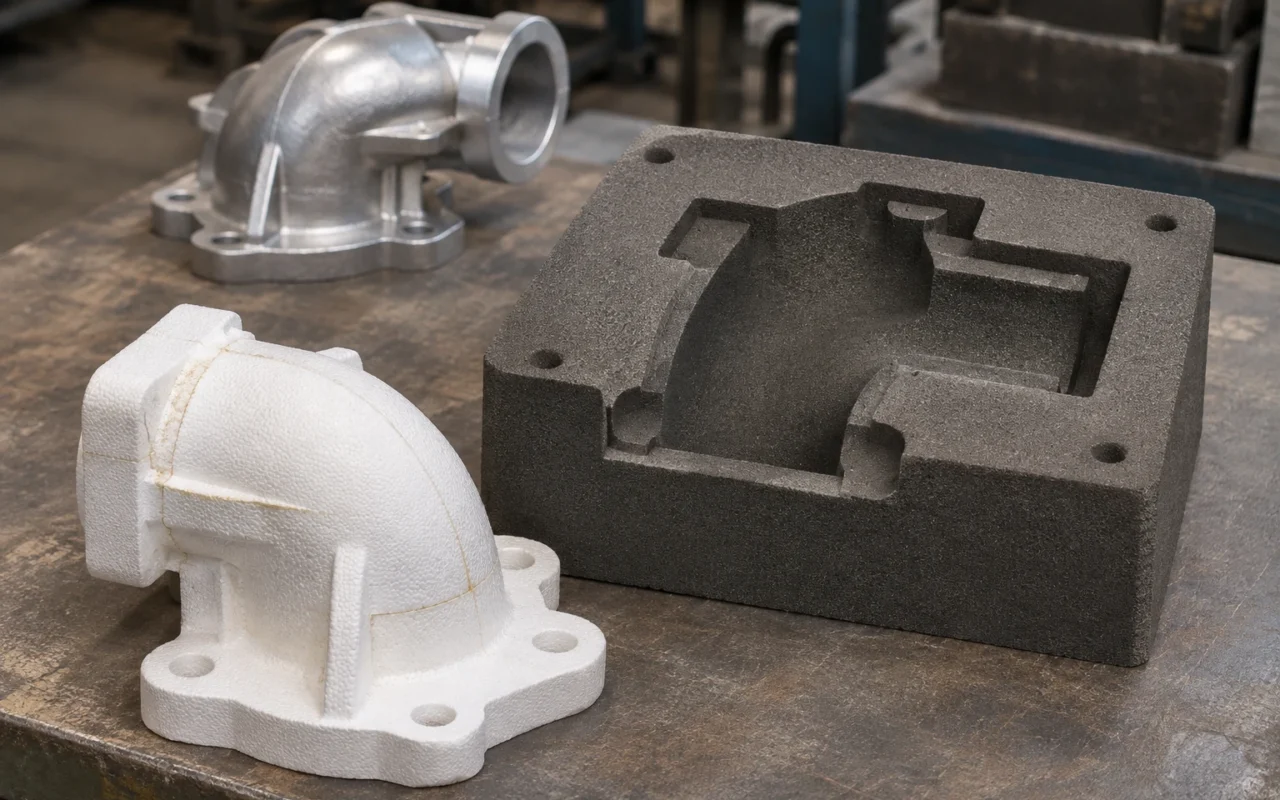
Different choices for changing development and stable repeat work
Prioritize sand 3D printing for small new-product trials, complex cores and frequent revisions. Where a product repeats over the long term and foam patternmaking and pouring are established, retaining lost-foam casting better uses the existing process. The central difference is whether metal replaces a foam pattern or fills a sand cavity prepared beforehand.
That difference determines how complex features are formed and where design changes enter production. Separating development changes from stable repetition gives a useful first choice.
Lost foam makes a positive pattern; sand printing makes the mold directly
Lost-foam casting first makes a foam pattern corresponding to the casting. After assembly, coating and sand packing, the pattern stays in place and decomposes during pouring. Foam sections can be joined into complex shapes, with repeat patternmaking, coating and pouring organized around a stable product.
Sand 3D printing directly makes bonded molds and cores. After loose sand is removed, the sand parts define the cavity for metal. Revisions enter the sand-part data without first rebuilding a physical pattern or core box. Both routes use sand, but the digitally made object and its state during filling differ.
The lost-foam casting workflow explains the relationship between foam, coating and packed sand. Understanding this distinction is more useful than describing both methods simply as patternless casting.
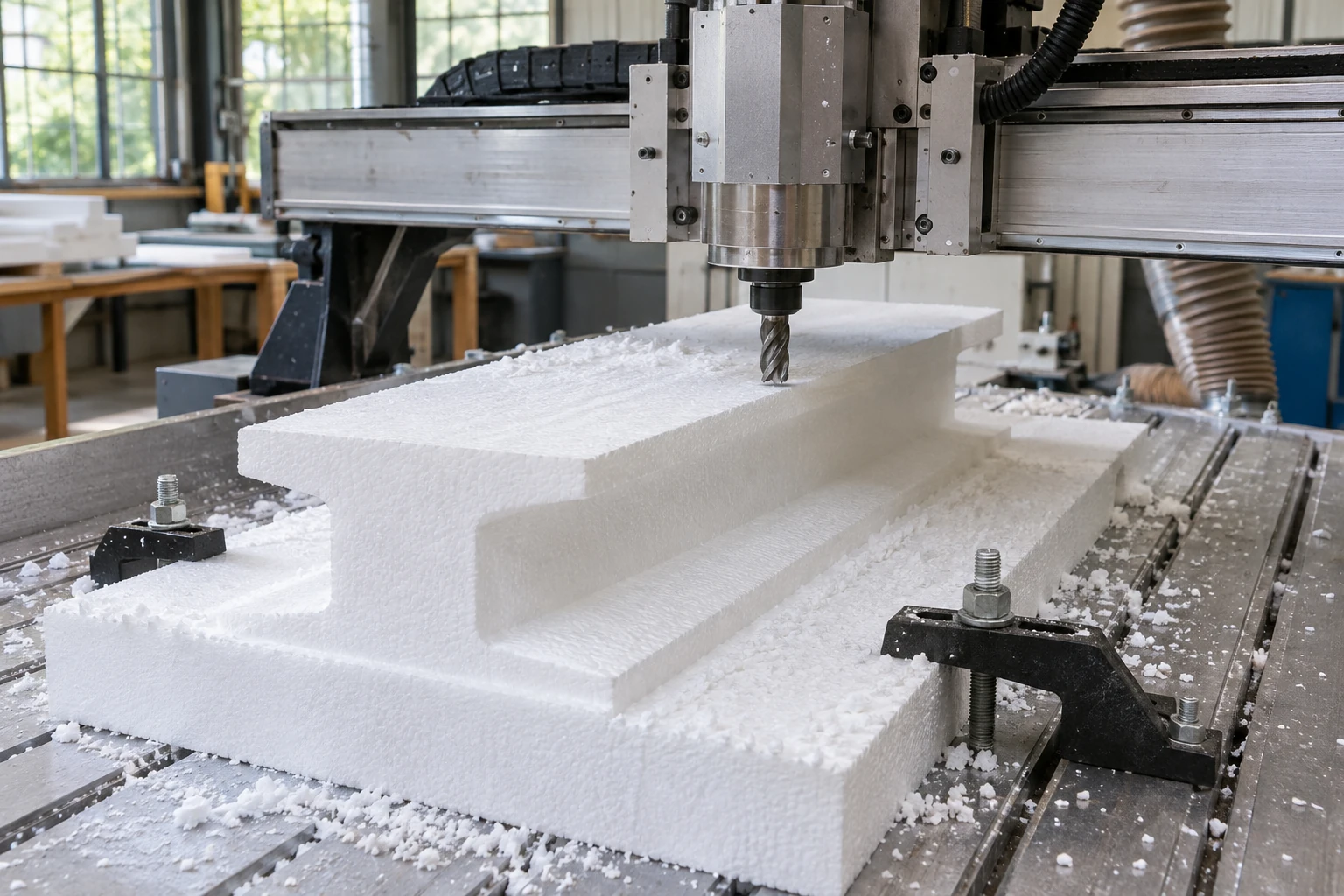
Sand printing simplifies new products and multiple versions
Interfaces, wall thicknesses and passages change repeatedly during development. Much time can be spent revising the basis for patternmaking. Direct mold and core printing concentrates changes in digital data and produces a new sand set. For cores difficult to make in a box, it reduces splits and moving tooling added for release.
Several passage or housing variants can share a development program as printing tasks. Designers receive actual castings for the respective versions and continue modifying the associated sand data, helping move casting development forward quickly.
Small quantities of foam patterns can also be machined; lost-foam work does not always require a dedicated foaming die. Direct printing’s advantage is complex sand geometry and digital revision, rather than an assumed tooling charge imposed on every alternative.
Lost foam has its own strengths for complex repeat products
Complex geometry comes from foam patterns and their assembly. Once the forming and assembly method is fixed, a foundry can reproduce the same patterns with established coating, packing and pouring cycles. Complexity alone does not require a move to sand printing: a mature lost-foam line can already make complex castings.
The GM cylinder-block study hosted by SFSA illustrates complex internal passages formed through foam patterns. The value comes from the complete process: pattern assembly maintains geometry, coating and surrounding sand contribute support and gas escape, and metal takes the place of foam.
For products already delivered consistently, preserving this production knowledge is more direct than changing the entire line merely to add a technology. New printing capacity is most useful where existing patternmaking struggles or revisions become more frequent.
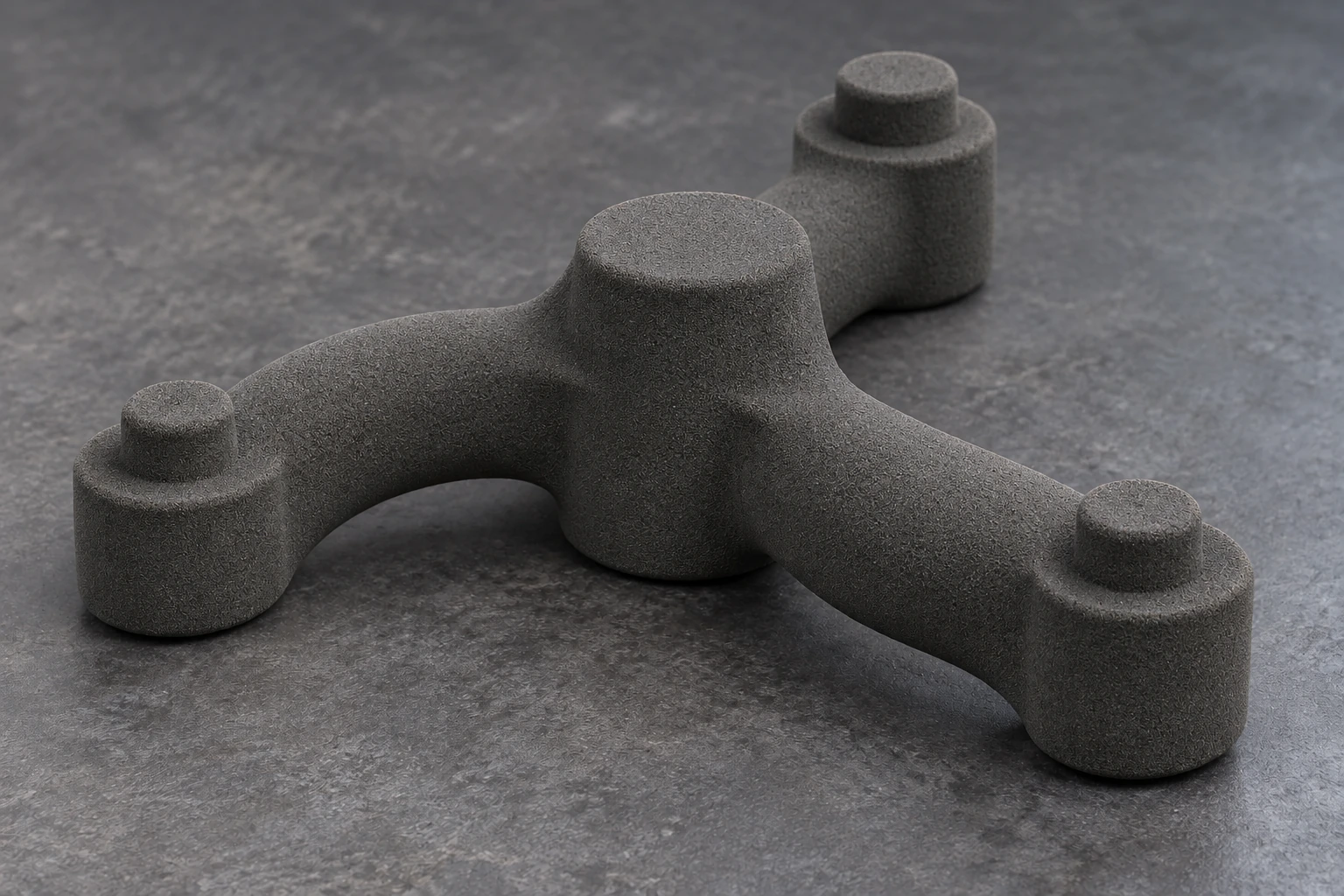
Filling mechanisms explain different process-control priorities
In lost-foam pouring, the advancing metal interacts with foam decomposition. Pattern consistency, coating and escape conditions therefore affect filling. A correct foam shape still needs reliable coating, drying and sand packing.
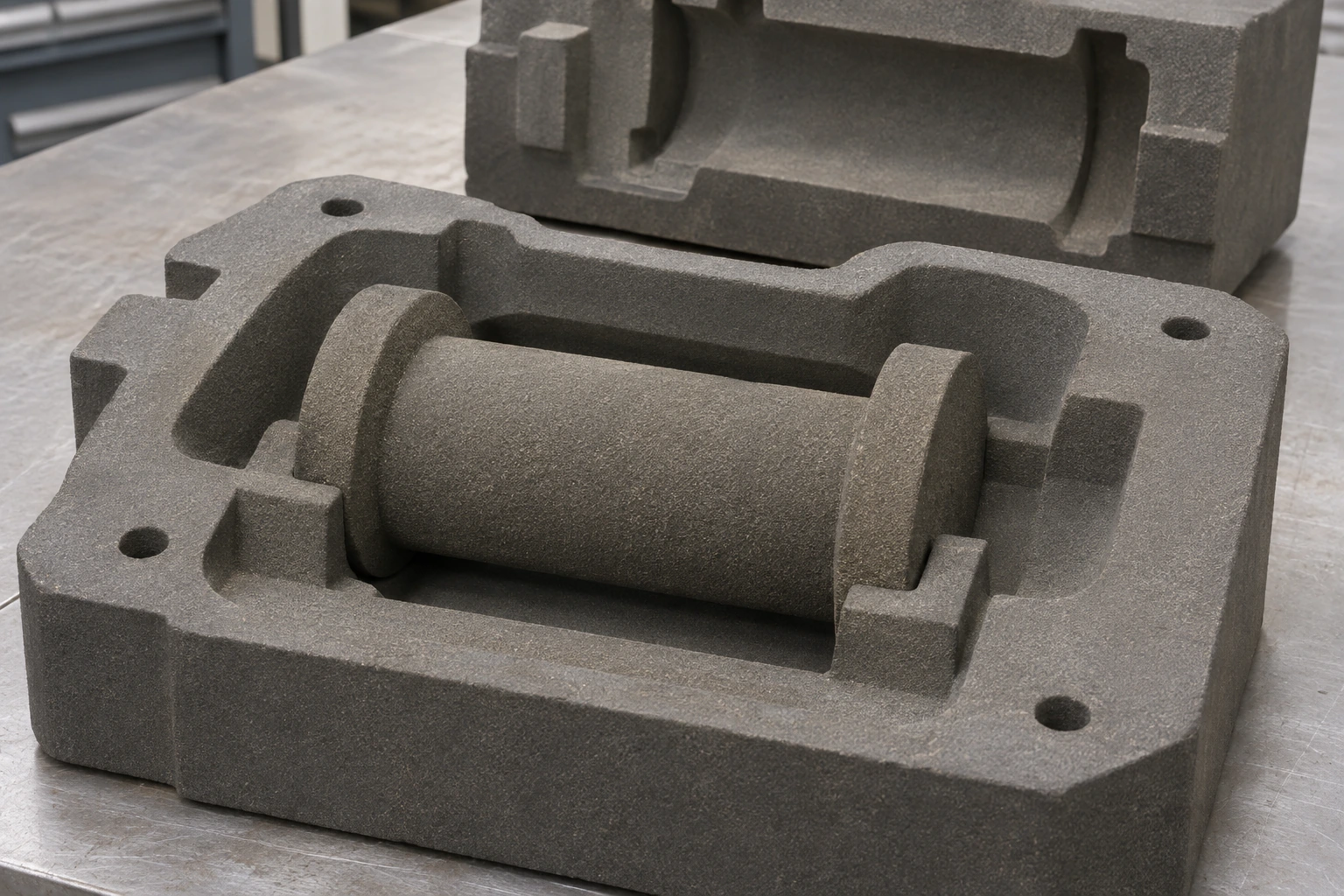
A printed sand cavity exists before pouring. Priorities shift to core strength, cavity cleanliness, positioning and mold assembly. Complex passages particularly depend on core integrity and cleaning access. Each route addresses its own process issues; pattern or mold appearance alone does not establish final casting quality.
| Production task | Recommended route | Main reason |
|---|---|---|
| New-product trials and several design versions | Sand 3D printing | Put revisions into sand data and reduce tooling preparation |
| Complex cores difficult to make in core boxes | Sand 3D printing | Build complex core geometry directly |
| Stable product and established foam and pouring line | Retain lost-foam casting | Use repeat patternmaking and accumulated line knowledge |
| Small quantity with easily machined foam geometry | Retain a machined-foam option | Avoid dedicated pattern-forming tools for a short run |
Give new equipment the new manufacturing problems
Most projects can use printing for development changes and established processes for stable repeats. Keep the useful exception of a small run with easily machined foam, where machining is also straightforward. The overview of metal casting processes places both routes in context.
The Cprint 3D SJ-1200 sand 3D printer adds digital manufacturing of complex molds and cores. Bring recent development parts and difficult cores to the Cprint 3D team to discuss configuration, concentrating printing where geometry and revisions create the greatest workload.