

3D Printers for Wax Patterns, Sand Molds and Cores
Cprint offers two 3D printing systems for casting: one prints paraffin wax patterns for investment casting, while the other produces sand molds and cores for foundries.
Choose the Right 3D Printing System for Your Casting Process
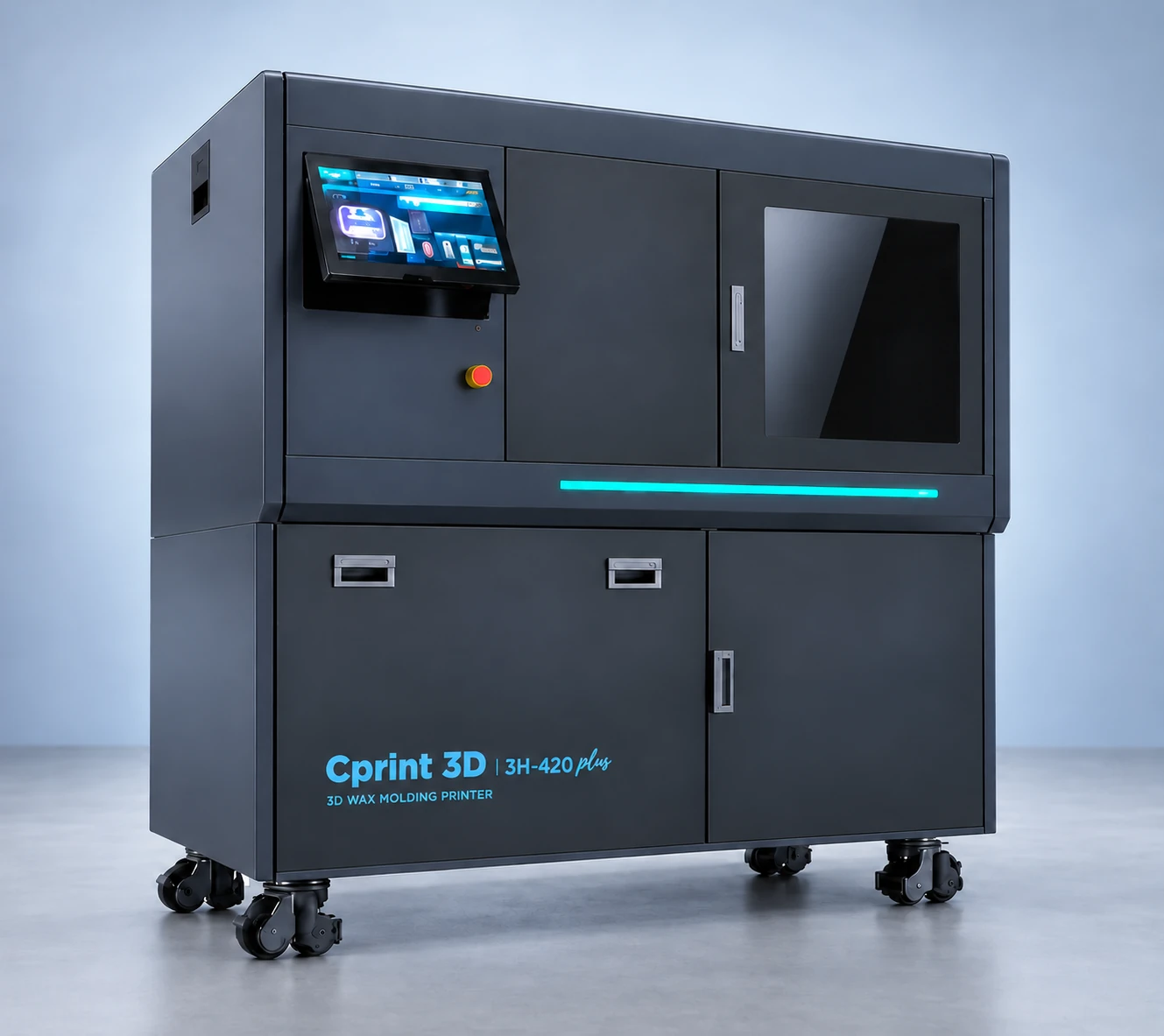
WAX PATTERN 3D PRINTING
3H-420 Plus Wax 3D Printer
The 3H-420 Plus is an MJP wax 3D printer for jewelry manufacturing and precision investment casting. With three Xaar printheads and a 410 × 206 × 150 mm build volume, it produces detailed wax models from prepared 3D data for custom orders, short runs and production batches.
- MultiJet Printing (MJP) Technology
- 410 × 206 × 150 mm Build Volume
- High-Volume Batch Production
SAND MOLD & CORE PRINTING
SJ-1200 Sand 3D Printer
The SJ-1200 prints sand molds and cores directly from print-ready 3D data for medium and large industrial castings. It is designed for both straightforward molds and complex cores used to form internal passages.
- Direct Mold and Core Printing
- Large-Format Industrial Production
- Complex Cores and Internal Passages

Casting Applications and Printed Outputs
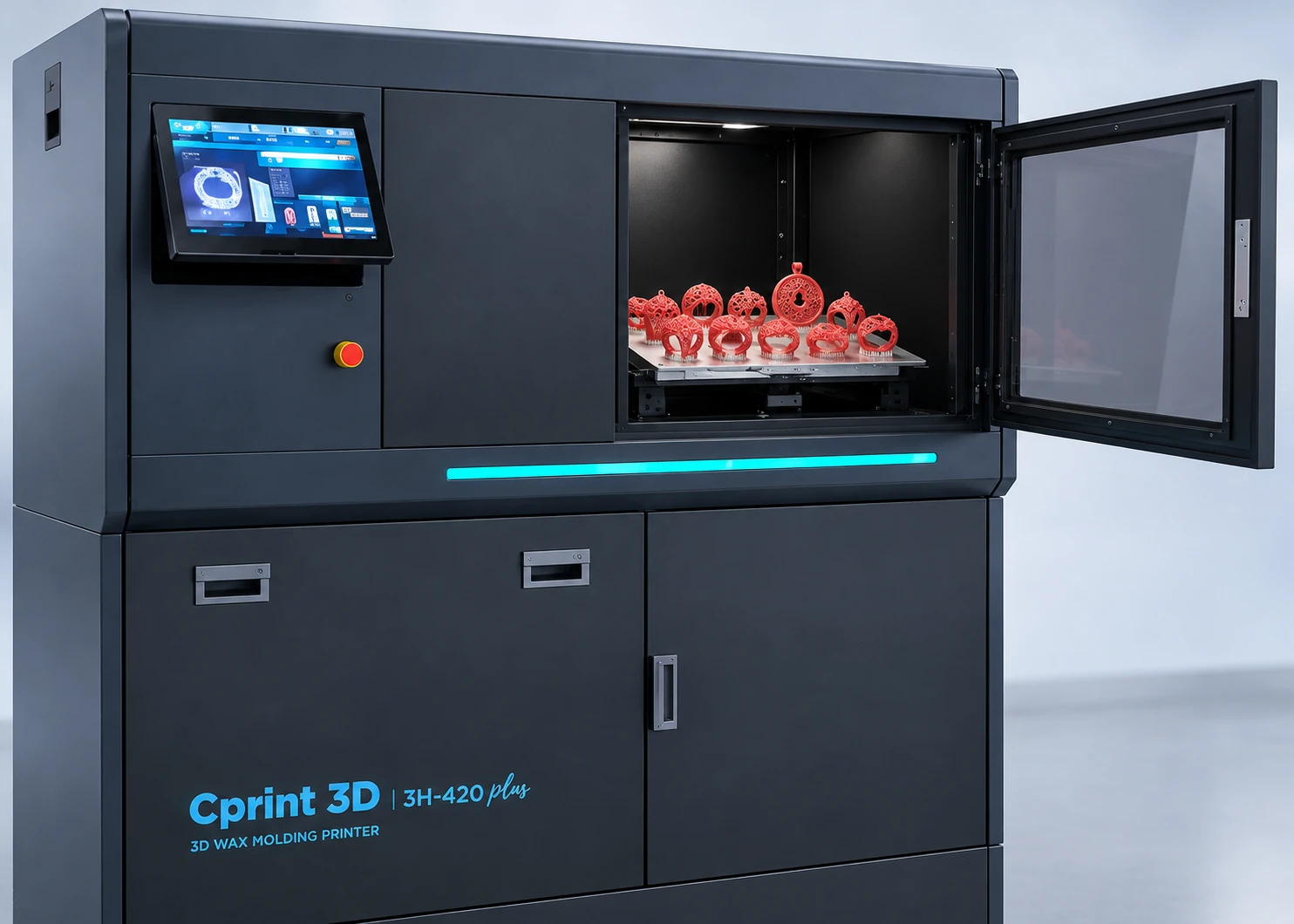
Jewelry Manufacturing
- System
- 3H-420 Plus Wax 3D Printer
- Printed Output
- Wax Jewelry Models
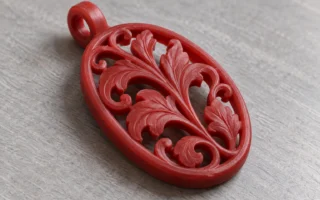
The 3H-420 Plus turns digital jewelry designs into detailed wax models for rings, pendants and other intricate pieces. It supports custom orders and batch production, with printed models prepared for the jeweler’s established investment casting workflow.
Explore Jewelry Manufacturing
Investment Casting
- System
- 3H-420 Plus Wax 3D Printer
- Printed Output
- Wax Patterns for Investment Casting
The 3H-420 Plus produces wax patterns for precision investment casting directly from prepared CAD data. It supports complex industrial geometries and repeat production, with printed patterns moving through established shell building, burnout and metal casting processes.
Explore Investment Casting
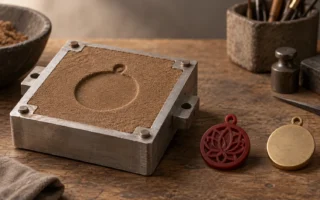
Sand Mold and Core Production
- System
- SJ-1200 Sand 3D Printer
- Printed Output
- Sand Molds and Cores
The SJ-1200 produces sand molds and cores directly from prepared CAD data for medium and large industrial castings. Printed cores can form complex internal passages, while direct mold printing removes the need for a conventional pattern.
Explore Sand CastingLatest News and 3D Printing Resources
HAVE A QUESTION?
Frequently Asked Questions About Cprint 3D Printers
Browse common questions about the 3H-420 Plus and SJ-1200. Still need help? Leave us a message using the contact options below, and we’ll get back to you within 24 hours.
3H-420 Plus WAX 3D PRINTER
Different brands focus on different strengths—some on print speed, some on fine detail, automation or material choice. The 3H-420 Plus’s key advantage is its build platform, the largest among wax 3D printers worldwide and about 40% larger than comparable systems. That extra space lets factories fit more patterns into each build and complete large orders with fewer print jobs.
The larger platform gives you more room to arrange patterns in every build. If the same order would require several jobs on a smaller printer, the 3H-420 Plus may be able to complete it in fewer jobs. The benefit comes from greater batch capacity, not a 40% increase in print speed.
Yes. It can be used for one-off prototypes, custom orders, short production runs and high-volume wax pattern production. The large build platform is most valuable when you want to place many patterns in one build, but the machine can also be used for smaller jobs.
The 3H-420 Plus prints paraffin wax, not castable resin. The printed wax patterns are made for standard lost-wax and investment casting processes used by jewelry manufacturers and foundries.
The 3H-420 Plus uses MultiJet Printing (MJP) technology. It jets tiny droplets of wax layer by layer to build detailed patterns, while its large platform provides the capacity needed for production batches.
You can use the 3H-420 Plus to print wax patterns for rings, pendants, detailed jewelry pieces and precision metal components, as well as other investment casting work. For very thin features, unusual dimensions or difficult geometry, Cprint can review the model before production.
SJ-1200 SAND 3D PRINTER
Yes. The SJ-1200 can print complete sand molds as well as separate sand cores directly from prepared CAD data. The mold creates the outer shape of the casting, while the core forms internal passages, holes and cavities.
The SJ-1200 is designed for medium and large industrial castings. It can handle straightforward molds and complex cores, but the final fit depends on the part dimensions, core design, tolerance requirements and the foundry process.
Traditional sand mold production often starts with a physical pattern or core box. The SJ-1200 prints molds and cores directly from CAD data, reducing the need for conventional tooling and making complex internal geometry easier to produce. This is useful for custom parts, prototypes and projects with frequent design changes.
PROJECT EVALUATION
Yes. Send your CAD model or casting drawing along with the required dimensions, casting process and expected production volume. Our team can check printability, likely build layout and any file preparation needed before preparing a quote. If helpful, we can also discuss producing a sample print.
START YOUR PROJECT
Tell Us About Your Casting Project
Tell us what you plan to cast, the system you are considering and what you need from the project. Our team can help with sample requests, application questions and equipment quotations.
WHAT YOU CAN SEND
- 3D Model
- Casting Drawing
- Required Dimensions
- Casting Process
- Production Requirements
You do not need a finished CAD file to start the conversation.