
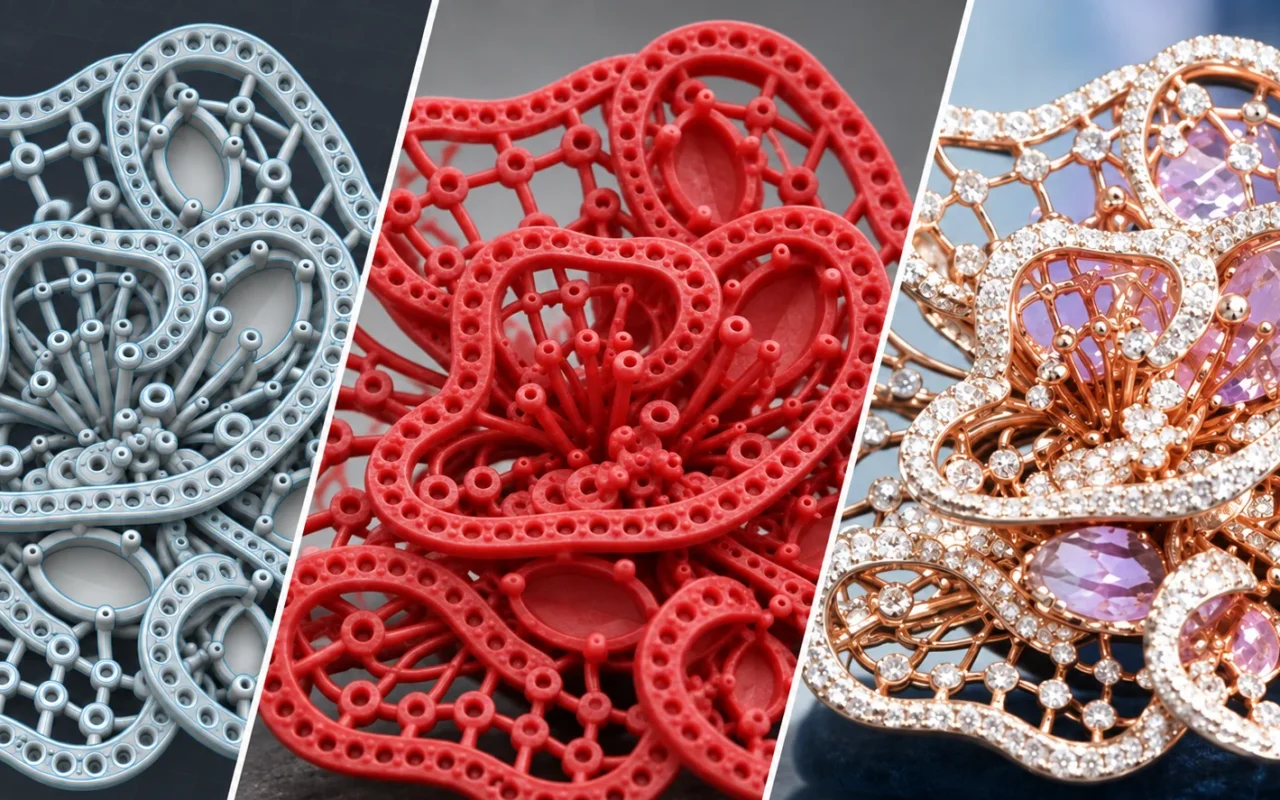
How is jewelry actually made? There is rarely a single answer. Most pieces pass through a chain of design, forming, joining, casting, finishing, and setting operations.
A simple ring may begin as metal stock that is bent, soldered, shaped, and polished. A highly detailed piece with openwork or multiple stone seats may be designed in CAD, produced as a disposable pattern, cast in metal, and then cut, finished, and set. Stable high-volume designs may instead favor stamping, die forming, or wax injection from a rubber mold.
It helps to separate two questions: how the final metal piece is formed, and how a disposable casting pattern is produced. Wax 3D printing mainly changes the second step. It turns approved digital geometry into a sacrificial pattern; it does not replace casting, polishing, stone setting, or manufacturing judgment. See how this fits into wax 3D printing for jewelry manufacturing.
What are the main ways to make jewelry?
Jewelry production can combine forming, joining, casting, machining, setting, and surface finishing in one piece. The Victoria and Albert Museum’s guide to metalworking techniques likewise shows that metal objects often rely on several processes rather than one isolated method.
| Method | How it works | Good fit | Main limitation |
|---|---|---|---|
| Hand fabrication | Metal is sawn, forged, bent, soldered, filed, and polished. | One-offs, repairs, hand-finished character, and details controlled directly at the bench. | Repeatability and throughput depend heavily on craft time and skill. |
| Stamping and die forming | Presses and dedicated tooling shape metal blanks. | Stable designs, sheet components, findings, and repeat production. | Tooling takes time and is less flexible when designs change often. |
| Lost-wax casting | A disposable pattern creates a cavity that is filled with molten metal. | Rings, pendants, earrings, bracelets, openwork, and complex surfaces. | Results depend on the entire pattern, sprue, investment, burnout, alloy, and pouring process. |
| Electroforming | Metal is deposited electrochemically over a form. | Lightweight, hollow, or unusual surface constructions. | Thickness control, form removal, and finishing require a dedicated process. |
| CNC machining | Cutting tools remove material from wax or metal. | Controlled geometry, master models, and accessible surfaces. | Undercuts, deep cavities, and fine enclosed features are limited by tool access. |
| Direct metal additive manufacturing | Metal feedstock is built layer by layer into a near-net-shape part. | Specialized geometries and high-value applications. | Its machines, supports, heat treatment, and finishing differ from pattern casting. |
No route is automatically superior. The right choice depends on geometry, alloy, volume, lead time, surface requirements, downstream capability, and cost. Digital tools still depend on manufacturability decisions, casting knowledge, and skilled finishing.
How does lost-wax casting turn a pattern into metal jewelry?
Lost-wax casting uses a disposable pattern. During dewaxing and burnout, the pattern leaves a cavity inside the investment. Molten metal then fills that cavity.
- Make the pattern. It may be hand carved, wax injected, CNC machined, or 3D printed.
- Add sprues and assemble a tree. The feed system must support filling, venting, shrinkage control, and later cutting.
- Invest the pattern. Gypsum-bonded investment or another refractory material surrounds the assembly.
- Dewax and burn out. A controlled thermal cycle removes the pattern and prepares the mold.
- Cast, cool, and remove the investment. The selected metal or alloy is poured into the cavity and allowed to solidify.
- Cut and finish. Sprues are removed before reshaping, soldering, polishing, plating, or setting.
A printed wax pattern is therefore not a directly printed metal jewel. It is one input in a longer process whose outcome also depends on spruing, investment, burnout, alloy, pouring, and finishing. For the wider industrial context, see Cprint 3D’s investment casting applications.
How can jewelry casting patterns be made?
Lost-wax casting does not prescribe one pattern-making method. The practical question is which route best matches the design, production volume, and validated foundry process.
Hand-carved wax
Carving gives the maker direct control over volume, texture, and detail. It suits one-off and artistic work, but repeated copies and frequent size or setting changes consume more bench time.
Master model, rubber mold, and wax injection
A proven master can be molded in rubber or silicone, then used to inject repeat wax patterns. Once qualified, this route is efficient for stable, recurring designs. Its front-loaded cost is the master, mold, and setup required for each design or size.
CNC-machined wax
CNC machining can cut a pattern or master from wax. It offers controlled dimensions on accessible geometry, but deep cavities, undercuts, enclosed passages, and delicate openwork may require redesign or another process.
Castable resin printing
Photopolymer printing can produce a disposable castable resin pattern from CAD. Despite being casually called “printed wax,” the material is a resin. Washing, post-curing, support removal, thermal expansion, ash, and a resin-specific burnout schedule all need attention.
True-wax 3D printing
True-wax printing makes a disposable wax pattern directly from the digital model. A separate support wax can hold openwork, overhangs, and delicate details. After printing, the support is removed and the pattern is dried and inspected before treeing.
The Cprint 3D 3H-420, for example, uses a red paraffin-based 100% wax build material with a white wax-based support material. This differs from a castable photopolymer. Both can serve as sacrificial casting patterns, but their cleaning, thermal behavior, ash, and burnout requirements should not be treated as interchangeable. Review the 3H-420 printing wax materials for the material route used by this system.
GIA’s jewelry CAD/CAM program overview places additive and subtractive CAM, 3D printing, and manufacturability within the same professional skill set. The goal is not merely to print a model, but to connect design data with pattern production and downstream manufacturing.
Why are 3D-printed wax patterns gaining ground in jewelry casting?
“Gaining ground” does not mean every jewelry factory should replace its existing method, or that printing is cheaper for every part. It means that printed wax becomes a serious option when production involves complex geometry, frequent revisions, customization, and mixed batches.
Revisions return to the digital file
Changing a ring size, stone seat, proportion, or texture after a conventional master and mold are complete may require reworking or remaking tooling. In a CAD-to-wax workflow, the revision starts in the digital model; once approved, a new pattern can be laid out and printed. This is useful for custom work, size variations, design families, and market trials.
Complex geometry can move from CAD to a physical pattern
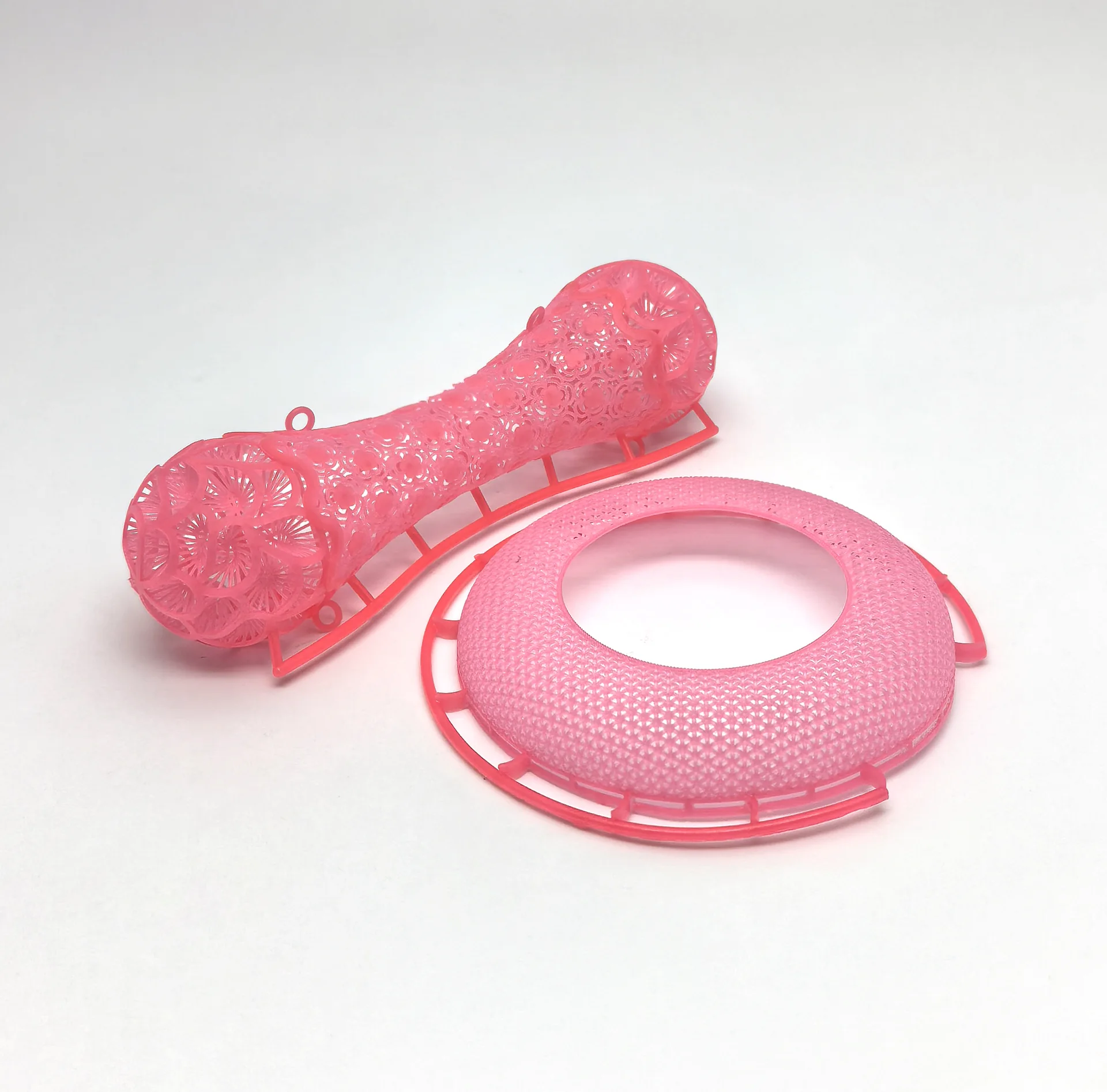
Openwork, filigree, fine textures, compound surfaces, and multidirectional details can demand extensive handwork or complicated mold parting. Layer-based printing and removable support can make some of these geometries easier to realize as physical patterns.
Yet printable does not automatically mean castable. Wall thickness, support access, sprue design, metal flow, and finishing access must be considered before production.
Different designs and sizes can share one build
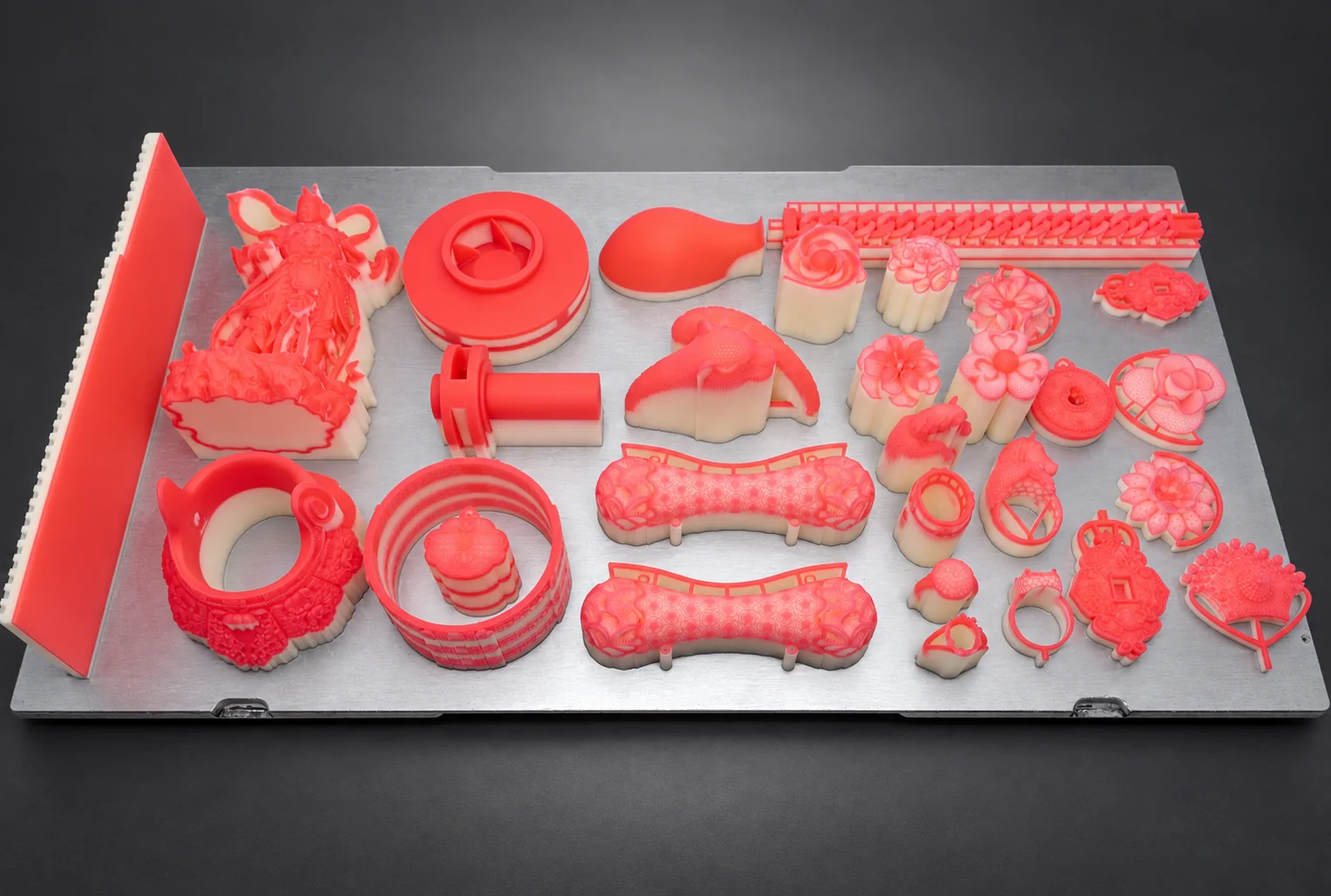
Digital nesting can combine different designs or sizes when spacing, orientation, support, and identification are managed correctly. This suits custom orders, replenishment, market tests, and high-mix production.
Platform count alone is not a useful capacity measure. What matters is the number of cleaned, inspected, accepted patterns ready for treeing. Part height, layout density, support volume, cleaning difficulty, and rework all affect real output.
Digital files support repeat work and version control
Approved geometry, sizes, and revisions can be stored and recalled for later production. That reduces dependence on locating and preserving physical masters. Consistency still requires controlled machine condition, material, orientation, support strategy, cleaning, and environment.
Printed wax can enter an established lost-wax workflow
Wax printing changes front-end pattern production rather than replacing treeing, investing, dewaxing, burnout, pouring, and finishing. Compatibility is not automatic: the wax, investment, flask size, thermal cycle, alloy, and casting method must work together. Representative print-and-cast trials are more informative than comparing specifications alone.
At the 2026 Shenzhen International Jewelry Fair, Cprint 3D presented the 3H-420 Plus with a redesigned exterior as part of an application-focused discussion with jewelry professionals. Read the 2026 Shenzhen International Jewelry Fair show review for that event context. The show report documents the presentation; it is not used as market-share evidence.
3D-printed wax is not the best route for every job
For a stable design with long-running demand, a qualified rubber mold and wax-injection process may deliver a mature cycle and lower unit cost. One-off artistic work may still favor hand fabrication or hand carving.
Printing also has design limits. Enclosed spaces may trap support; fragile walls can deform during printing, cleaning, treeing, or casting; support contacts affect finishing; and poor sprue design can still cause an otherwise printable model to cast badly.
Printer selection should therefore look beyond nominal resolution:
- wax material behavior in the existing foundry cycle;
- safe support removal around holes, openwork, and settings;
- usable build area and nesting for real orders;
- stability and maintenance during sustained production;
- results from printed pattern through accepted casting; and
- the supplier’s ability to validate representative customer designs.
How should you choose a jewelry manufacturing route?
| Task | Route to evaluate first | Why |
|---|---|---|
| One-off art, repair, or visible hand character | Hand fabrication or hand-carved wax | Direct control over form, joining, and surface detail |
| Stable design and repeat volume | Stamping, die forming, or qualified mold-injected wax | Tooling cost can be spread across ongoing production |
| Customization, frequent revisions, sizes, or setting changes | CAD plus printed wax or castable resin, followed by casting | Fewer design changes require a new dedicated master and mold |
| Openwork, filigree, and complex surfaces | Manufacturability-checked digital pattern plus lost-wax casting | Digital forming can produce complex disposable patterns |
| A metal near-net-shape part is required directly | Direct metal additive manufacturing | It uses a separate metal-printing and post-processing system |
These routes can also be combined. A digital master may be used to make a rubber mold for stable volume, or a short run of printed wax patterns may validate a design before tooling. The aim is not to adopt a technology label, but to balance quality, change frequency, volume, and cost.
3D printing changes the pattern-making entry point—not the jewelry craft
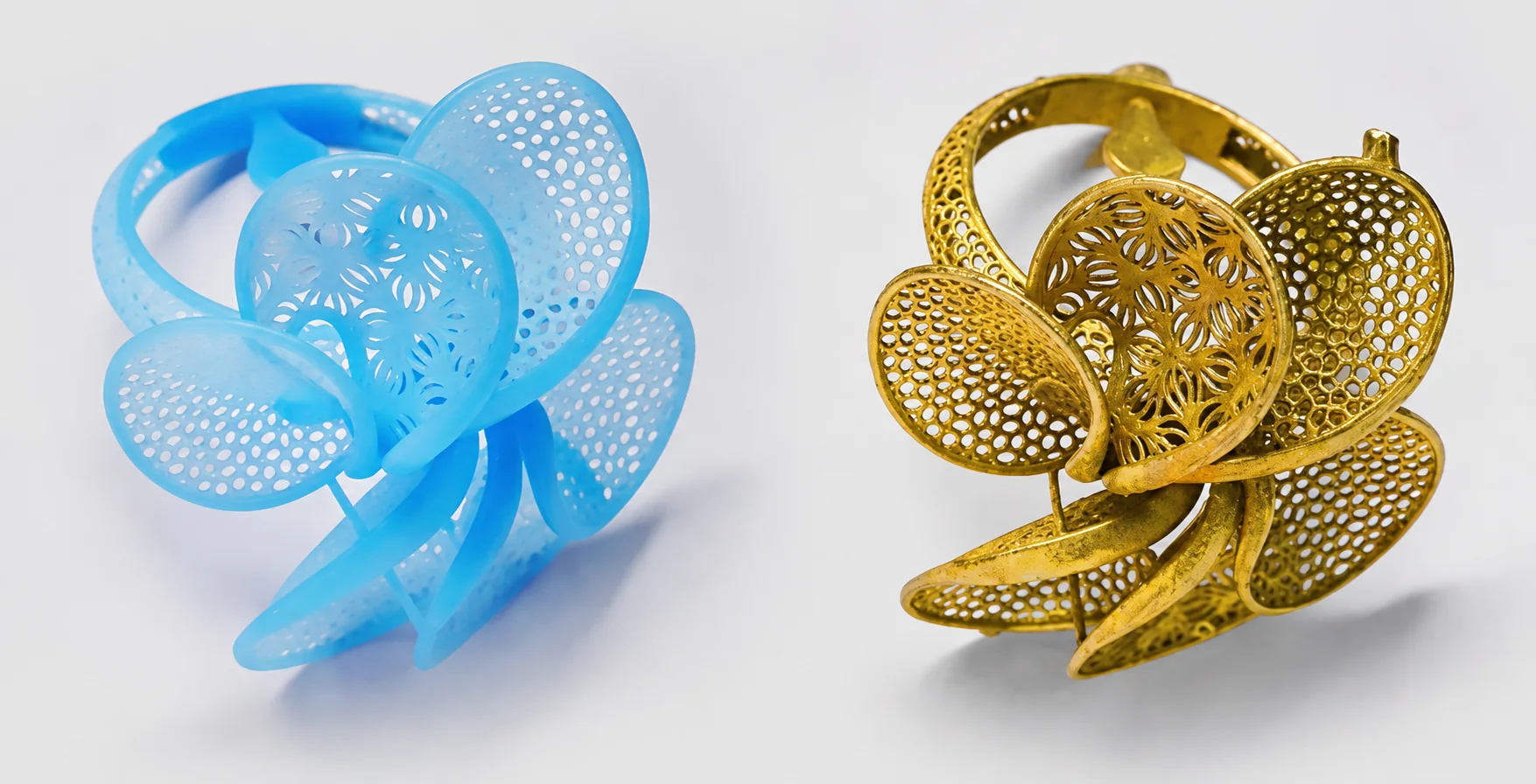
Hand fabrication, stamping, mold forming, lost-wax casting, electroforming, CNC machining, and direct metal additive manufacturing each have a place. Wax 3D printing connects CAD with an established casting route: designs can be revised directly, complex patterns can be produced without dedicated tooling for every variation, mixed jobs can share a build, and approved files can be recalled.
Companies evaluating complex jewelry, customization, frequent revisions, or mixed batches can review the 3H-420 wax 3D printer for jewelry and send a representative CAD file for sample evaluation. Include the target alloy, dimensions, quantity, and current casting process so suitability can be judged from actual patterns and cast results.
Frequently asked questions
Does 3D-printed jewelry always mean a directly printed metal piece?
No. It may mean direct metal additive manufacturing, or it may describe a process that prints a disposable wax or resin pattern before lost-wax casting. The 3H-420 follows the second route: it prints wax patterns, not finished metal jewelry.
What is the difference between printed wax and castable resin?
True-wax systems use wax pattern material. Castable resin is a photopolymer and normally requires washing and post-curing. Both may be burned out, but their expansion, ash, support handling, and qualified thermal cycles differ.
Can a printed wax pattern be poured immediately?
No. It must be cleaned, dried, and inspected, then treed, invested, dewaxed, and burned out before metal is poured. The final result depends on the complete process.
Is wax 3D printing only for custom and short-run jewelry?
No. Custom and short-run work are common fits, but mixed nesting, reusable files, and batch pattern production can also support higher volumes. Economics depend on build height, platform use, cleaning time, acceptance rate, labor, and alternative tooling cost.
Why do high-volume designs still use rubber-mold wax injection?
When a design is stable and the mold is already qualified, wax injection can offer a mature cycle and low unit cost. Printing is generally strongest where geometry, variation, and flexible batching matter, so the methods are often complementary.
What should you compare when choosing a jewelry wax 3D printer?
Compare material behavior, support removal, usable build size, real nesting capacity, surface and dimensional consistency, sustained operation, maintenance, and the supplier’s ability to validate the full route from pattern to casting.