
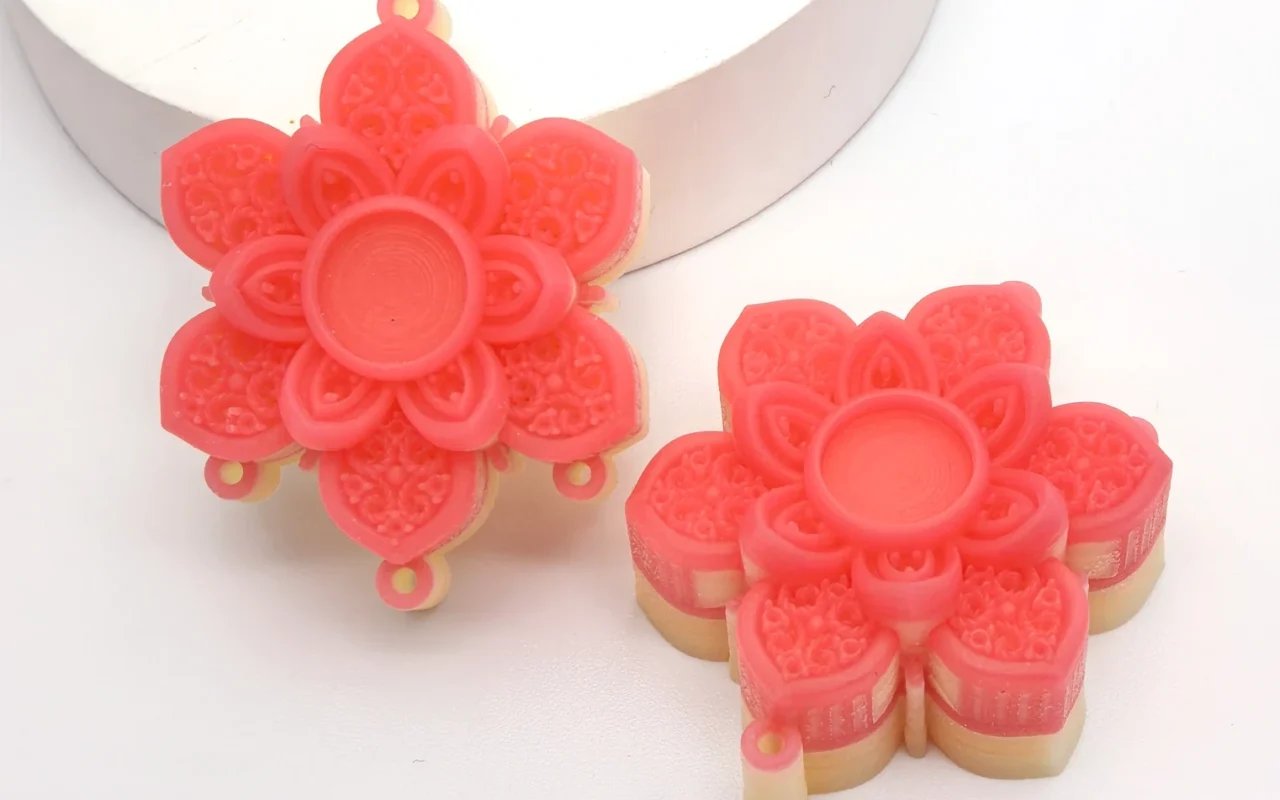
Support removal and dewaxing both remove material, but at different stages and with different objects left intact. Support removal takes printing aids off the wax pattern before the casting mold is made, preserving the model. Dewaxing removes the wax pattern after investing or shell building, leaving a cavity for metal.
Confusing these operations can obscure the delivery condition of a model or allow unchecked support residue into casting. The distinction is simple: support removal preserves the wax pattern; dewaxing preserves the casting mold.
Identify What Is Removed and What Must Remain
In wax spray printing, the main body of wax forms the model, and supporting supporting materials help shape the model. After printing, the supports need to be processed according to the method confirmed by the equipment and material suppliers so that the main wax model can be inspected, assembled and cast. The support treatment method depends on the actual material combination, and you cannot infer from the words “support wax” that it can be removed with water.
Take the wax material page published by Flashforge as an example. It lists model materials and support materials respectively, and provides corresponding support removal conditions. This shows that support requires material supporting information that belongs to a specific system and should not be copied directly across brands. Model wax and support material description
When dewaxing, what needs to be removed is the wax pattern and related wax structures that have been surrounded by the mold material. The geometric expression task that previously needed to be retained in the model has been transferred to the mold cavity. The process objectives have changed, and the inspection objects have also changed.
Inspect Patterns After Support Removal
“Support has been processed” is the process status, “Model can be grouped into trees” is the release conclusion, and the two need to be checked. Whether the model is complete, whether key details are damaged, whether auxiliary materials remain in parts, and whether the dimensions meet the requirements should all be confirmed as agreed.
In particular, inspection methods should be explained for complex hollows and deep grooves. A clean appearance on the outside is no substitute for inspection of critical areas on the inside. If direct observation is not possible, relevant project personnel need to determine the applicable inspection method or trial production verification method, rather than inserting tools into fragile structures at will.
If breakage or deformation is found during the cleaning process, the stage of occurrence and photos must be retained. Unconfirmed bonding, heating or wax filling may change the surface and dimensions of the model. When repairs are allowed, the method, responsible person and re-inspection results should be clearly stated. Do not just leave “processed” on the handover form.
Dewaxing Follows Mold Formation
The ceramic shell first undergoes dipping, stuccoing and drying to form the shell; for jewelry investing, the wax model is surrounded by corresponding materials and hardened. Only when a mold is formed that preserves the geometry can the model be removed. Ceramic shell making process description
The Investment Casting Institute’s dewaxing instructions describe process arrangements such as autoclave and flash firing, including removing the main amount of wax and treating the residue to bring the shell to the desired state. It presents the process relationship in the industry, and the specific equipment and heat treatment plan still need to match the actual casting mold, wax materials and parts. Dewaxing process description
Therefore, when the printing party delivers a wax model that has been desupported, it should not be called “dewaxed.” Similarly, if the casting party says that a certain batch of shell molds has been dewaxed, it does not mean that the de-supporting records of the previous models can be omitted. Both states require respective process evidence.
Distinguish Dewaxing from Burnout
In communication, the removal of the main wax, the treatment residue, and the heat treatment of the mold are sometimes collectively referred to as burnout or roasting. Actual arrangements should be stated in project documents to avoid different people using the same word to refer to different states of completion.
Dewaxing focuses on removing wax from the model. Subsequent heat treatment may also undertake tasks such as residual treatment and mold state adjustment. They can be connected in specific processes, or even completed in the same equipment program, but it cannot be inferred that all projects use three completely independent equipment steps.
Resin models also have different material behavior than wax models. Having “cast” or “lost wax” in the name does not mean that all materials have the same removal process. The process plan should be based on actual material files, and the baking curve of a certain resin cannot be used as the operating parameter for all printed wax patterns.
Define Handover Conditions Clearly
| stage | Main objects removed | objects to keep | Please confirm before next step |
|---|---|---|---|
| Remove support after printing | Printing auxiliary materials | Complete body wax model | Cleaning status, key details and dimensions |
| Dewaxing after mold formation | Wax patterns and corresponding wax structures | Casting geometry and integrity | Dewaxing results and subsequent processing arrangements |
| Corresponding roasting or heat treatment | Treat residues according to process, etc. | Casting molds that have reached the specified state | Compliance with actual pouring requirements |
It is recommended that the handover order be written as “Support removed, tree not assembled, delivered according to number”, or “Tree assembled, waiting to be buried”. These statuses are clearer than “processed wax patterns” and prevent receiving personnel from filling in non-existent operational records.
Handover information should also include body wax and support materials used, model version, quantity and inspections completed. If the cleaning is completed by the receiving party, the supporting materials should be stated together with the handling responsibilities; if it has been cleaned and released, key details should be recorded. In this way, the downstream knows whether it receives a model to be processed or a model that can enter the group tree.
The handover order can also separate “operation completion” and “inspection release”: the former records the actual processing and time, and the latter records the inspection scope, results and confirmer. When a step is completed but critical areas still need to be inspected, the recipient can see directly what work remains to be done.
The relationship from cleaning to tree assembly, shell making and pouring can be checked by combining Wax Pattern Post-processing and Lost Wax Casting Complete Process.
Three Misunderstandings That Cause Rework
First, understand support removal as melting the entire wax model. Desupporting requires preserving the body wax that expresses the shape of the part. If the body wax is damaged, the model needs to be re-evaluated.
Second, it is believed that the remaining supports can be left to be solved by subsequent roasting. Residual material may affect model inspection, assembly, and mold formation. Whether a specific residue is allowed to exist somewhere must be determined by the verified process and acceptance requirements, and cannot be decided by the operator’s convenience.
Third, it is believed that the low ash content of wax materials can eliminate the need for subsequent heat treatment. Ash content is an indicator of materials under specified test conditions, and does not mean that a complex casting has completed dewaxing, residual treatment and condition adjustment. The heat treatment arrangement should comply with the casting process.
Frequently Asked Questions
Must Every Support Be Removed Before Delivery?
The delivery status and processing conditions of the recipient should be agreed upon in advance. Some tasks require cleaning and delivery, and some tasks may be arranged otherwise; any arrangement should clearly define the responsibilities for follow-up processing and release. Retaining supports is not automatically a protective measure.
Who Should Investigate a Problem First?
First confirm at which stage the anomaly was first observed, as well as the records before and after the handover. Damage after model cleaning, damage during tree assembly, and problems after dewaxing of the casting correspond to different inspection objects. Arranging relevant personnel to jointly investigate based on records is more effective than judging responsibility based only on the word “wax”.