
Understanding jewelry sand casting
Jewelry can be sand cast. Some handmade pieces use this traditional process for pendants, rings and decorative parts with clear outlines and relatively substantial sections. Intricate stone settings, slender features and fine openwork place greater demands on the mold and metal filling, however. The fact that sand casting can produce jewelry does not make it suitable for every design.
In jewelry workshops, sand casting usually means hand molding specialized fine sand around a solid pattern. Its working conditions differ from those of large industrial sand 3D printers. This article covers that handmade jewelry process and its differences from lost wax casting.
How is jewelry sand cast?
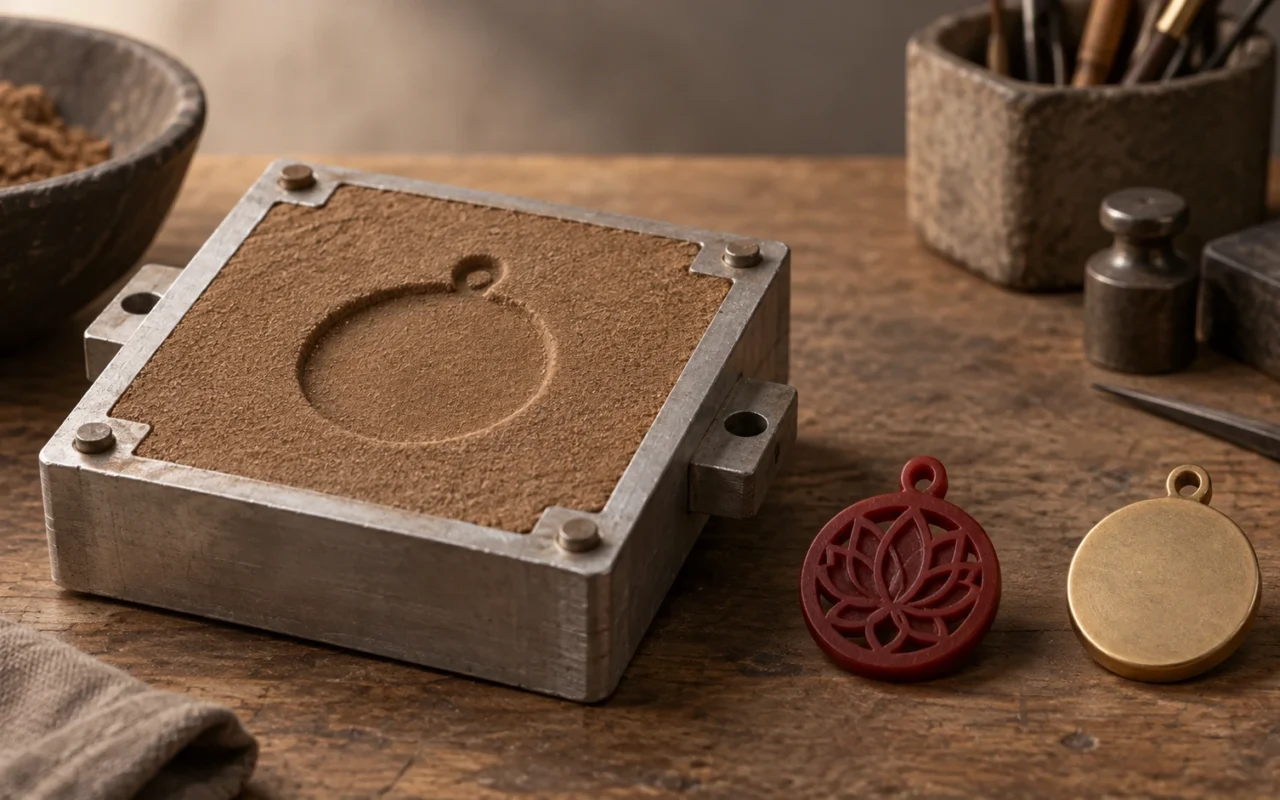
Think of a sand mold as a temporary tool for shaping metal: a pattern leaves its shape in the molding sand, the pattern is removed, and molten metal is poured into the remaining cavity.
A common manual method uses two molding frames, one above the other. The maker compacts specialized molding sand, embeds part of the pattern in the lower half, and forms the matching upper half. Opening the halves and removing the pattern leaves the jewelry’s shape in the sand. The maker then cuts passages for metal entry and any necessary vents, closes the mold and pours the metal. Once the casting is ready for cleaning, it is removed, the gate is cut off and the piece is finished. Ganoksin’s jewelry sand casting demonstration shows this two-part molding process.
The material is not ordinary sand picked up at hand. Jewelry molding materials need fine particles and suitable binding properties to compact and hold a cavity. Durston’s Delft Clay, for example, is a fine-grained molding material for small castings; the supplier lists rings, pendants and jewelry components among its uses. the product information also notes that it is better suited to designs without pronounced undercuts.
Patterns can be made from wood, plastic, metal or wax suitable for molding. Even when the pattern is wax, this sand casting method removes it before pouring metal. Using wax does not automatically make a process lost wax casting.
Why does complex jewelry encounter more limits in sand casting?
The pattern must come out of the sand mold
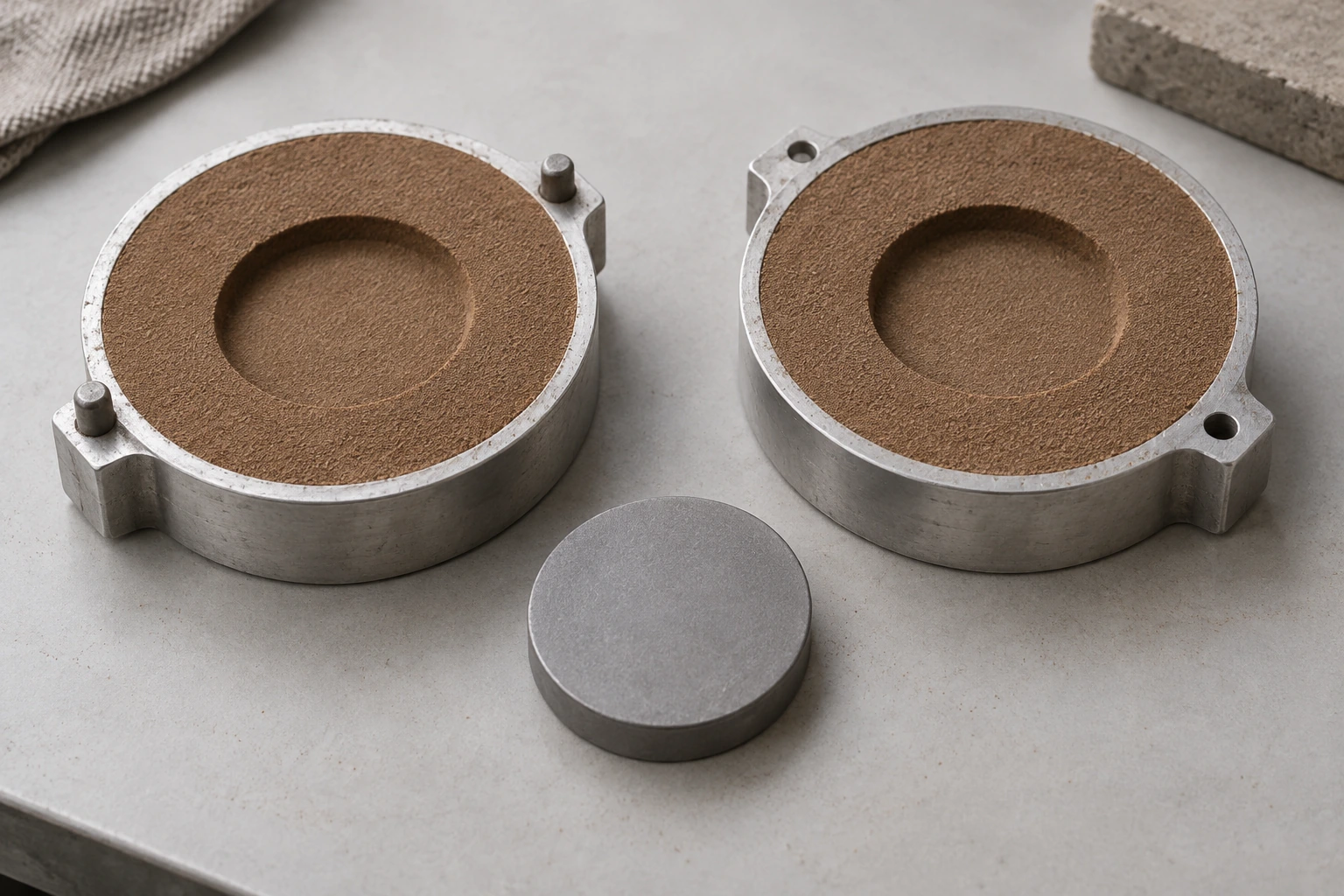
A key limit in hand-molded sand casting is pattern removal. The pattern must leave the cavity without pulling away compacted sand or damaging the shape that needs to remain.
This brings us to undercuts. An inward-hooking flange, for example, or a recess blocked by another feature along the withdrawal direction, can trap the pattern in the sand. Forcing it out may damage the cavity. In a common two-part hand mold, the parting line and withdrawal direction therefore directly affect the shapes that can be made.
Consider two hypothetical pendants. A flat-edged plaque with shallow relief on its front is relatively easy to divide between mold halves. A pendant with interwoven branches on both sides and tiny gaps between them is much harder to withdraw. The difference comes from its structure, rather than overall jewelry size alone.
Fine sand does not guarantee every detail will cast
Fine particles help record a pattern’s surface, but details formed during sand packing must still survive pattern removal, mold closing, metal filling and finishing.
Preserving a shallow texture and fully forming a very thin stone-setting prong are different problems. The first mainly concerns surface reproduction; the second also involves metal flow and solidification in a narrow cavity. A detail present on the pattern is not necessarily reproduced completely in metal.
Common manual sand casting uses gravity pouring. In very thin, long or winding areas, metal may begin to solidify before filling the cavity. Metalsmith Charles Lewton-Brain discusses the limits of gravity pouring, and why jewelry production uses methods such as centrifugal casting, in his jewelry sand casting notes.
Surface texture also affects the finished style
Sand castings may have a grainy surface. This can contribute to the character of handmade jewelry, but designs calling for a smooth, highly polished finish need more finishing work.
V&A’s introduction to metalworking explains that sand molds can transfer the grain texture of the molding sand to the casting. Jewelry with a natural texture and jewelry with a smooth finish may therefore require different amounts of subsequent work, even when their outlines are similar.
A grainy finish does not mean every surface defect should remain. Cracks, holes and sharp edges that affect wear still need attention.
How does lost wax casting form a jewelry mold?
Lost wax casting starts with a wax model, which is surrounded by refractory investment material. After the investment sets, dewaxing and burnout remove the wax pattern and leave a cavity for metal. Once the metal solidifies, the investment is removed and the casting is recovered.
This is the most direct distinction: hand-molded sand casting creates the cavity by withdrawing a solid pattern, while lost wax casting creates it by removing the wax inside an investment mold.
A typical jewelry lost wax process is:
- Make wax patterns and attach gates.
- Assemble several wax patterns into a tree and place it in a casting flask.
- Pour in investment material and allow it to set.
- Dewax and burn out according to the material requirements, then cast the metal.
- Remove the investment, cut off the castings, and finish and polish them.
Ransom & Randolph’s jewelry casting process shows the connections between model making, wax injection, tree assembly, investing and finishing. A one-off piece can also begin with an individual wax model, without first making a mold for repeated wax injection.
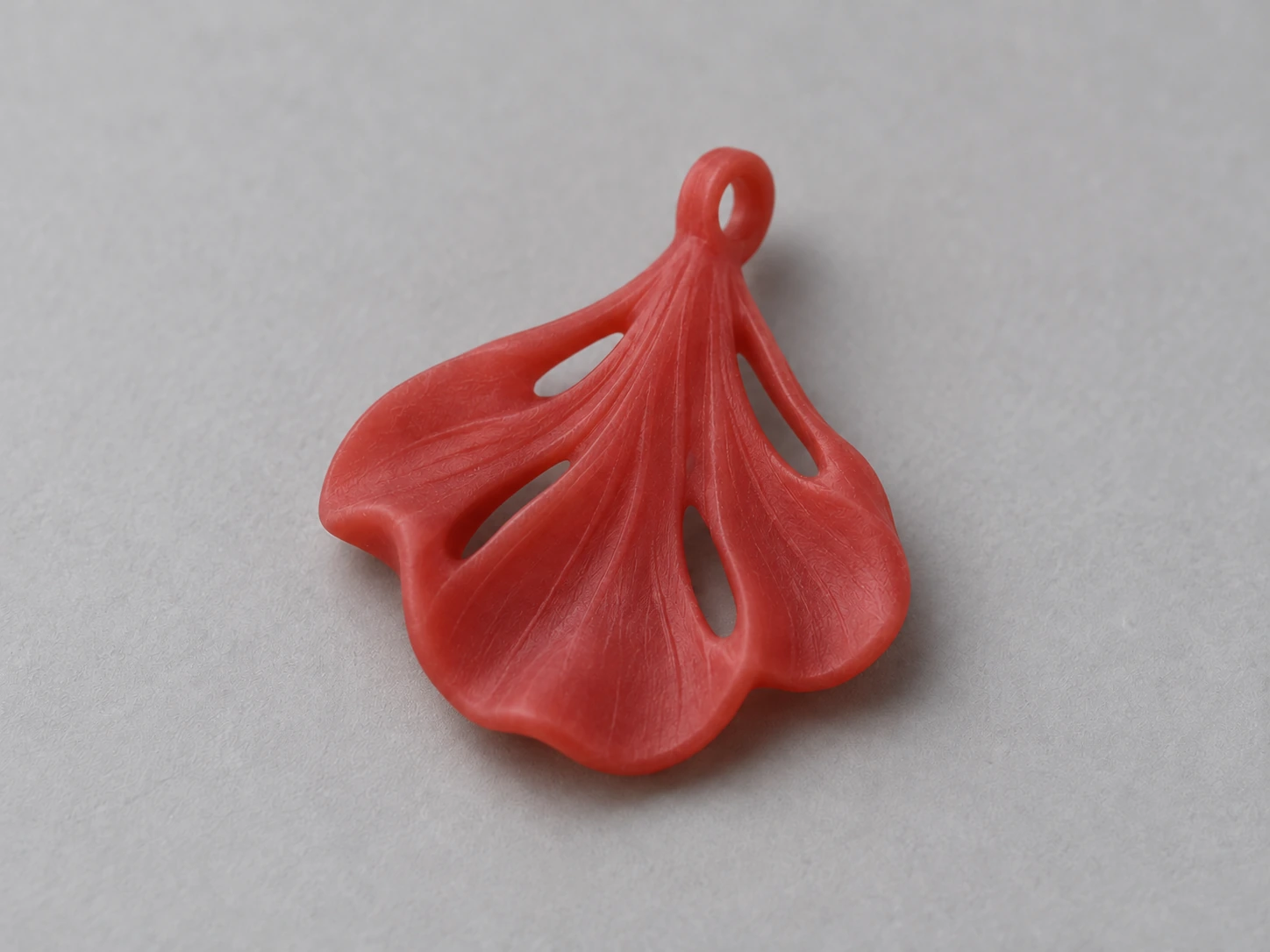
Because the wax pattern does not need to be pulled intact from hardened investment, lost wax casting accommodates more interwoven, recessed and three-dimensional features. This is an important reason it suits many complex jewelry designs. Metal must still fill the cavity, solidify and undergo finishing. Excessively thin connections and cavities that are difficult to clean do not disappear as problems simply because the wax is removed.
What are the main differences?
| Aspect | Common hand-molded jewelry sand casting | Common jewelry lost wax casting |
|---|---|---|
| How the cavity forms | Open the sand mold and remove the solid pattern | Remove the wax after investing |
| What happens to the pattern | It can be reused for molding after intact removal | Each wax pattern used for casting is consumed |
| Complex features | Strongly constrained by mold parting and withdrawal direction | The wax pattern need not be pulled from the final investment mold |
| Surface appearance | May retain the sand’s grain texture | Mainly reflects the wax pattern and investment surfaces |
| Preparation before casting | Pack sand, withdraw the pattern, repair the cavity and close the mold | Make wax patterns, assemble a tree, invest, dewax and burn out |
Sand molding is relatively direct. Common manual routes omit the investing and burnout stages of lost wax casting. Packing sand and withdrawing a pattern still require skill, however; fewer steps do not make an acceptable finished piece easy to achieve.
Lost wax casting involves more preparation, but a wax tree organizes several models for casting together. Its benefits include both freedom of shape and workflow organization for repeated production.
Which can be reused: wax models, replication molds or casting molds?
These names are easily confused.
In sand casting, the solid pattern used to form the cavity can be kept, but the sand mold usually needs to be remade after the casting is removed. Sand intended for reuse must be handled according to its material requirements; damaged or burnt portions cannot simply be treated as sound material.
In lost wax casting, the wax pattern is consumed during dewaxing and burnout, and the investment mold is broken to recover the casting. Rubber or silicone molds used to replicate wax models belong to an earlier stage and can produce multiple new wax models.
A reusable replication mold therefore does not mean that the same wax pattern can be cast repeatedly. Rio Grande’s guide to lost wax casting describes mold making, wax injection and investing as separate stages.
Wax models can also be hand carved or made with suitable 3D printing processes. To learn how printed wax models enter the later stages, read the process from printed wax models to lost wax casting.
Frequently asked questions
Can both gold and silver jewelry be sand cast?
Jewelry fine-sand materials are available for metals such as gold and silver. The alloy must fall within the material’s stated scope; suitability for a particular design also depends on its structure and surface requirements.
Does sand casting only produce rough jewelry?
That is too broad a claim. Specialized fine sand can record some surface detail, and makers also use sand casting for textured jewelry. This does not mean it can easily produce intricate openwork or slender setting prongs.
Is a lost wax casting already a finished piece?
No. Removing the investment is usually followed by gate removal, finishing and polishing. Designs with gemstones also need the appropriate setting work.
For a broader comparison of the processes, read the differences between sand casting and investment casting.