
Let hand creation and digital production do their best work
Jewelry teams making collections, size variations and repeat orders should use CAD and wax printing as their main model-making workflow. Hand carving remains direct and effective for freeform artistic one-offs. The useful division is to let digital data manage repeatable structures while skilled people concentrate on form and detail.
Equipment does not remove the value of hand carving, but craftspeople need not remake every repeat model. Separating original creation, structural development and subsequent output directs experience where it matters.
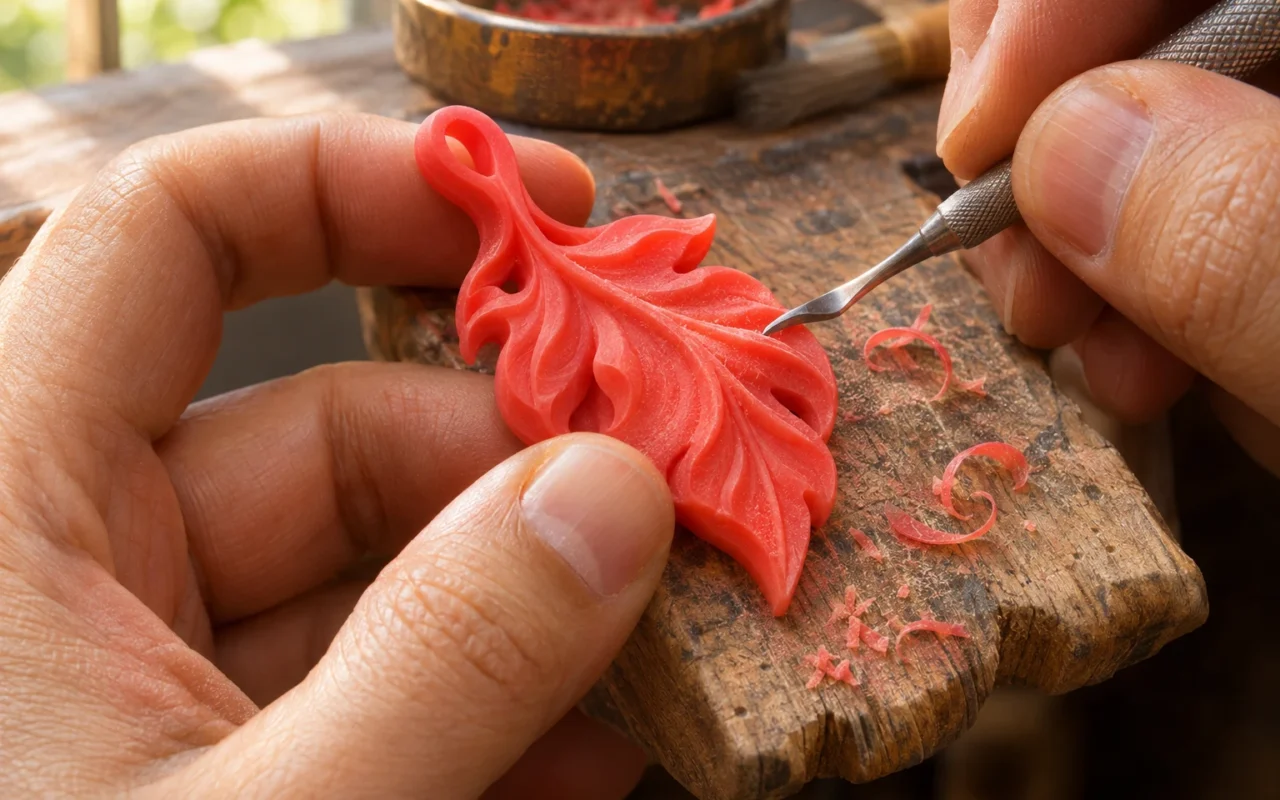
Hand carving is still direct for freeform surfaces and physical shaping
Organic shapes, free textures and irregular volumes can be developed directly in wax. A carver turns the model, thins or adds material and adjusts proportions, judging transitions, visual weight and wearable scale in the hand. This is straightforward for a unique piece that continues to evolve physically.
Handmade texture can be part of the design language. Bark, folds and freely undulating surfaces need not become regular CAD surfaces simply to enter a digital workflow. Get the form right first, then decide what to preserve and reproduce.
GIA’s visit to Lao Feng Xiang records hand drawing, CAD, wax carving and other manual operations working together. Craft belongs in creation and skilled execution rather than repeatedly starting an identical product from scratch.
Collections and customer revisions suit digital workflows
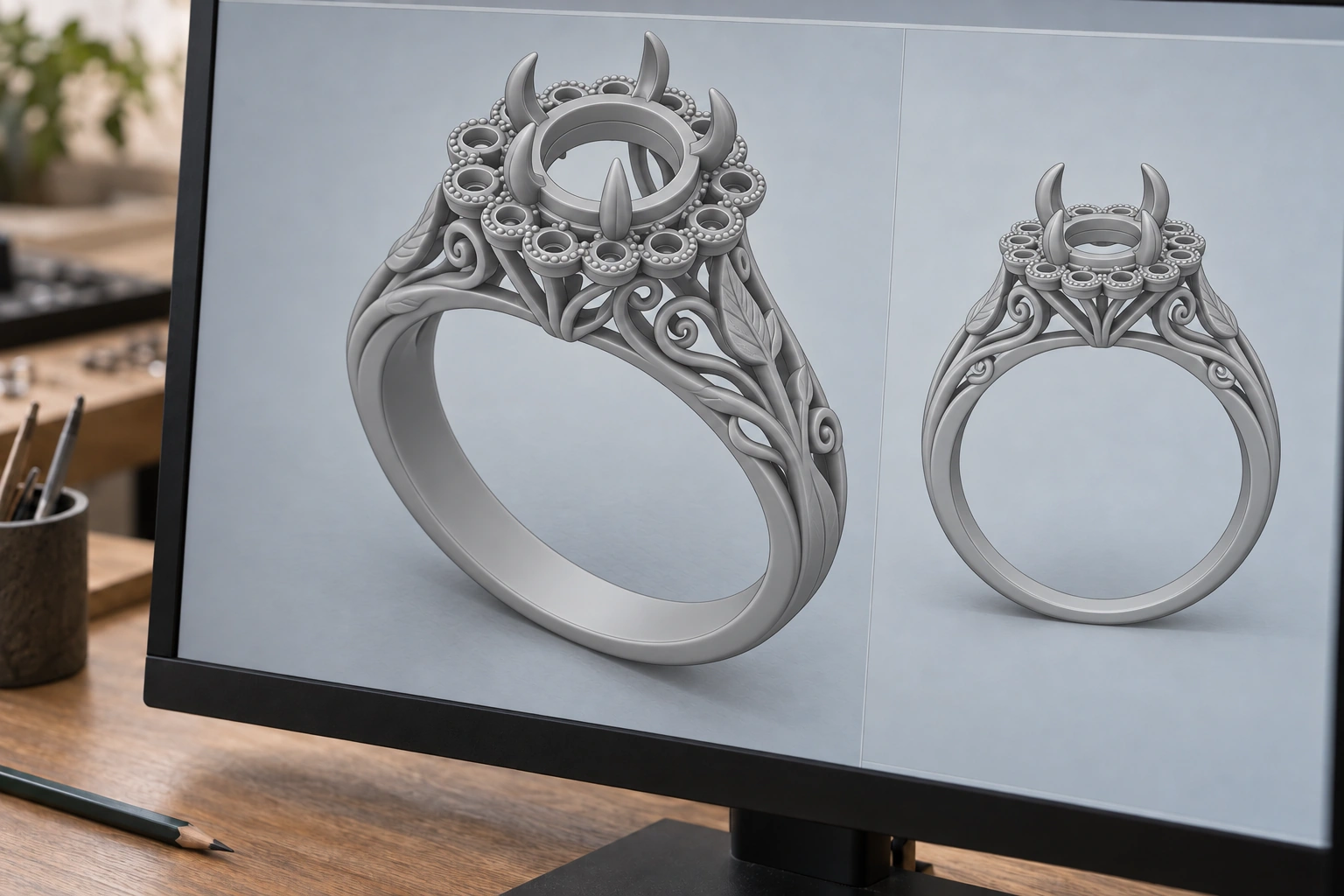
When a ring changes size, center stone or decorative combination, CAD retains its shared structure and creates variants from an existing model. Symmetry, repeated patterns and common settings become reusable data instead of being recreated each time.
Confirmed files can produce models again. For a later reorder, the team retrieves the correct version and makes the same design; related pieces retain common proportions and structural relationships. This traceability is one of digital wax-making’s most practical business benefits.
GIA’s introduction to jewelry CAD and CAM explains variants and element libraries. Integrating these capabilities into the custom jewelry workflow from idea to finished piece keeps approval, revisions and manufacturing handover around the same data.
Use craft experience for structural decisions and local finishing
Skilled work shifts from repeated copying to deciding where to thicken a section, how to connect a setting and which surface needs refinement. That knowledge matters in both manual and digital modeling; digital tools make it easier to retain as reusable geometry.
For example, once a ring’s form is settled, establish its shank, setting and connections as a stable model. Size changes build on that structure, and people finish the local areas that need attention after printing. Each practical correction can then become the next batch’s starting point.
| Work | Main method | Practical benefit |
|---|---|---|
| Artistic one-off, organic form and free texture | Hand wax carving | Directly observe and adjust a physical form |
| Ring sizes, collection variants and symmetric elements | CAD modeling | Retain dimensions and shared structures |
| Multiple designs and repeat orders | Confirmed CAD with wax printing | Reproduce by version with less remaking |
| Structural corrections and local finishing | Skilled people with digital records | Preserve manufacturing knowledge for later production |
Return physical changes to the production reference
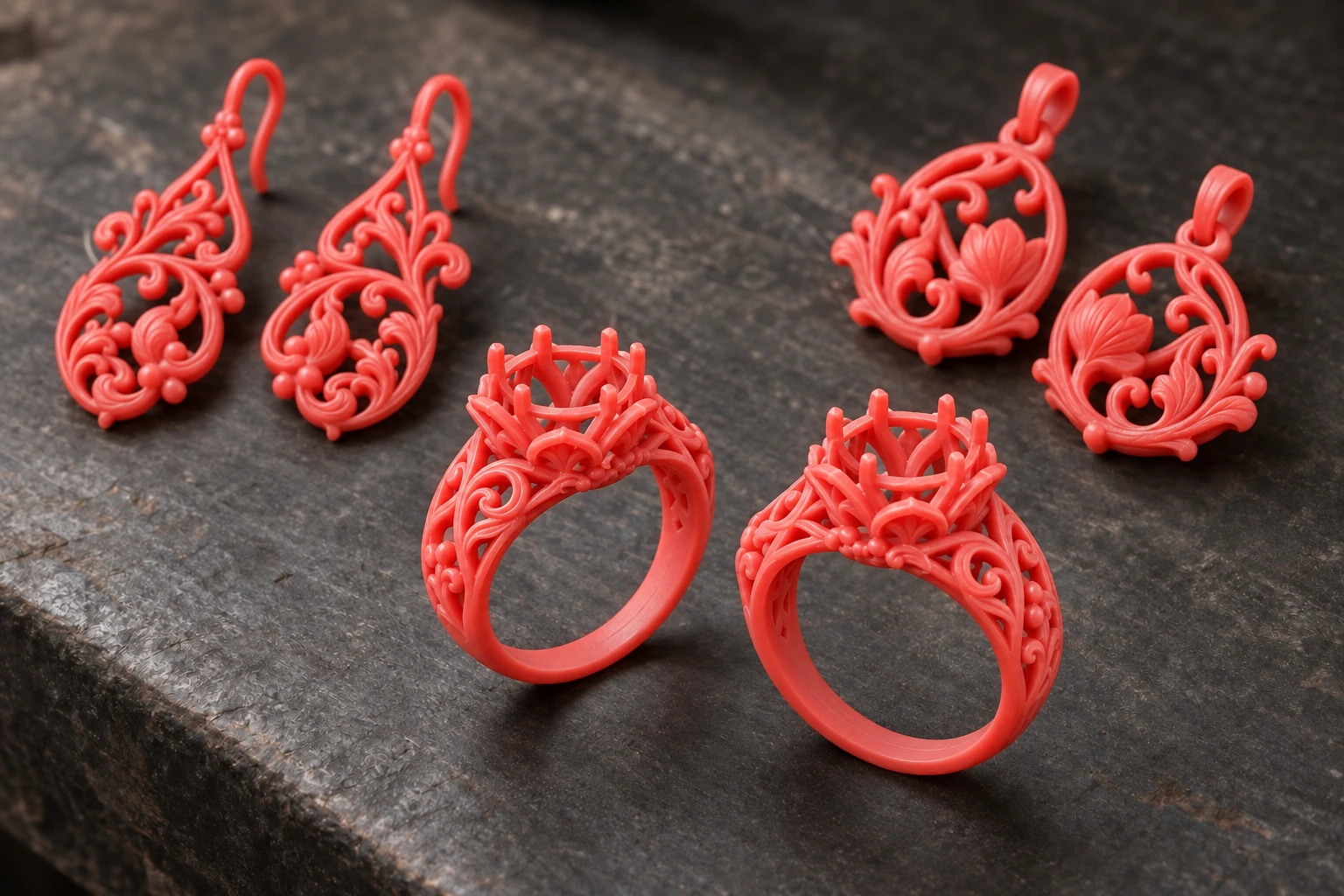
A mixed workflow wastes time when a physical model is corrected but the next order uses an old file. Separate local one-off finishing, which belongs in the process record, from dimensional, connection or shape changes needed in future orders, which must update the CAD or official master model.
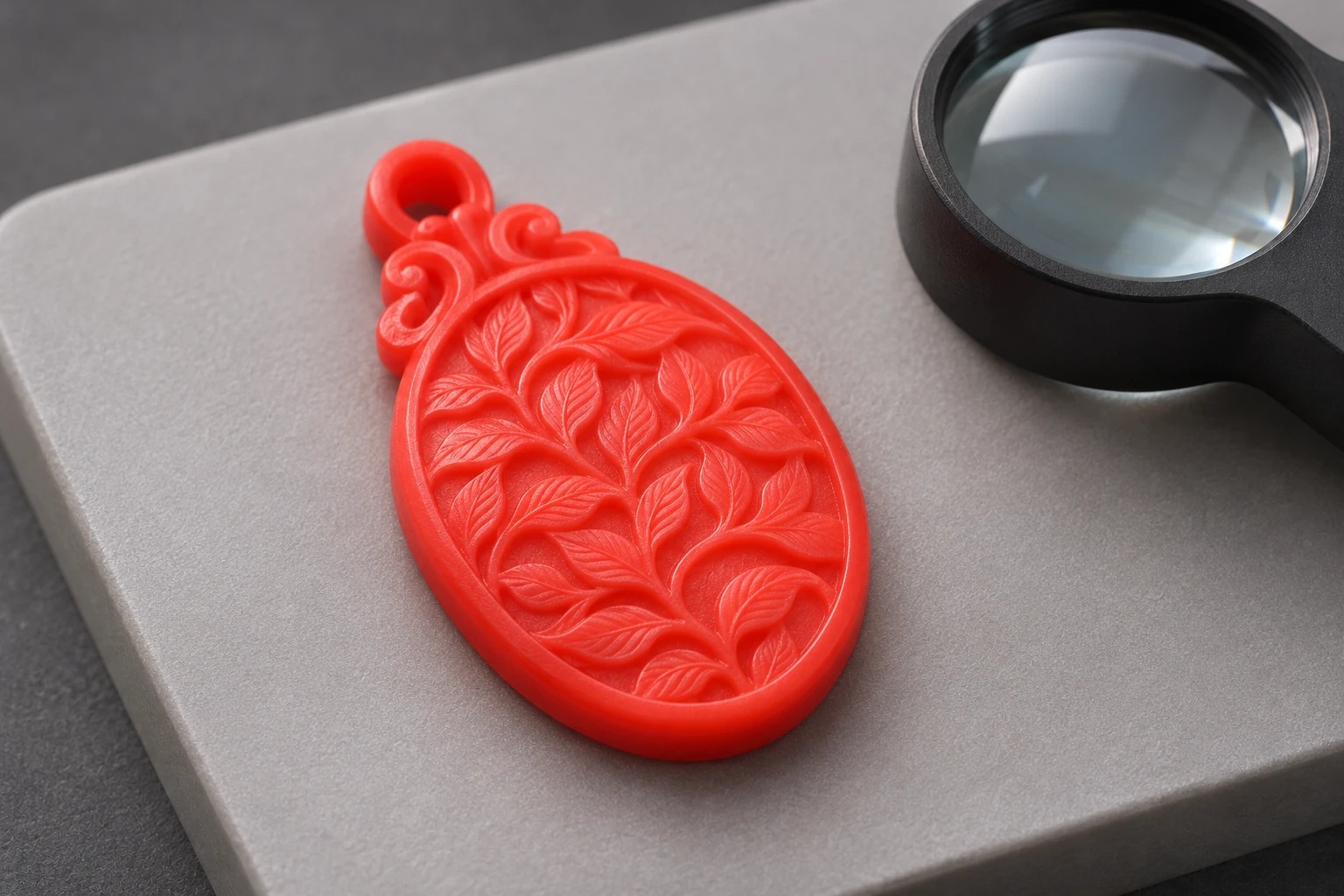
An original may be hand-carved and then digitized for repetition, or defined in CAD and locally refined after printing. Both work if the next batch has a clear production reference. The overview of casting wax model methods distinguishes masters, direct models and repeat output.
Keep a hand-led approach when every piece deliberately has a different form and that variation is the artwork’s value. Such work does not need repetition for its own sake; digital tools can supply dimensional references, archiving or selected components.
Make digital output the everyday route while craft keeps adding value
For ordinary custom orders, collections and reorders, a stable CAD-to-wax-printing workflow generally scales better than carving every item anew. People gain time for original work, structures and complex finishing, while digital data handles versions and repeated output.
The 3H-420 Plus wax 3D printer converts digital models into casting wax models. Slicing, supports and nesting are print preparation; CAD design is performed in the appropriate design software.
Bring common designs, reorder patterns and revision needs to the Cprint 3D team to discuss printer configuration. Assign human judgment to design decisions and machines to suitable repeated output, so both capabilities support order delivery.