
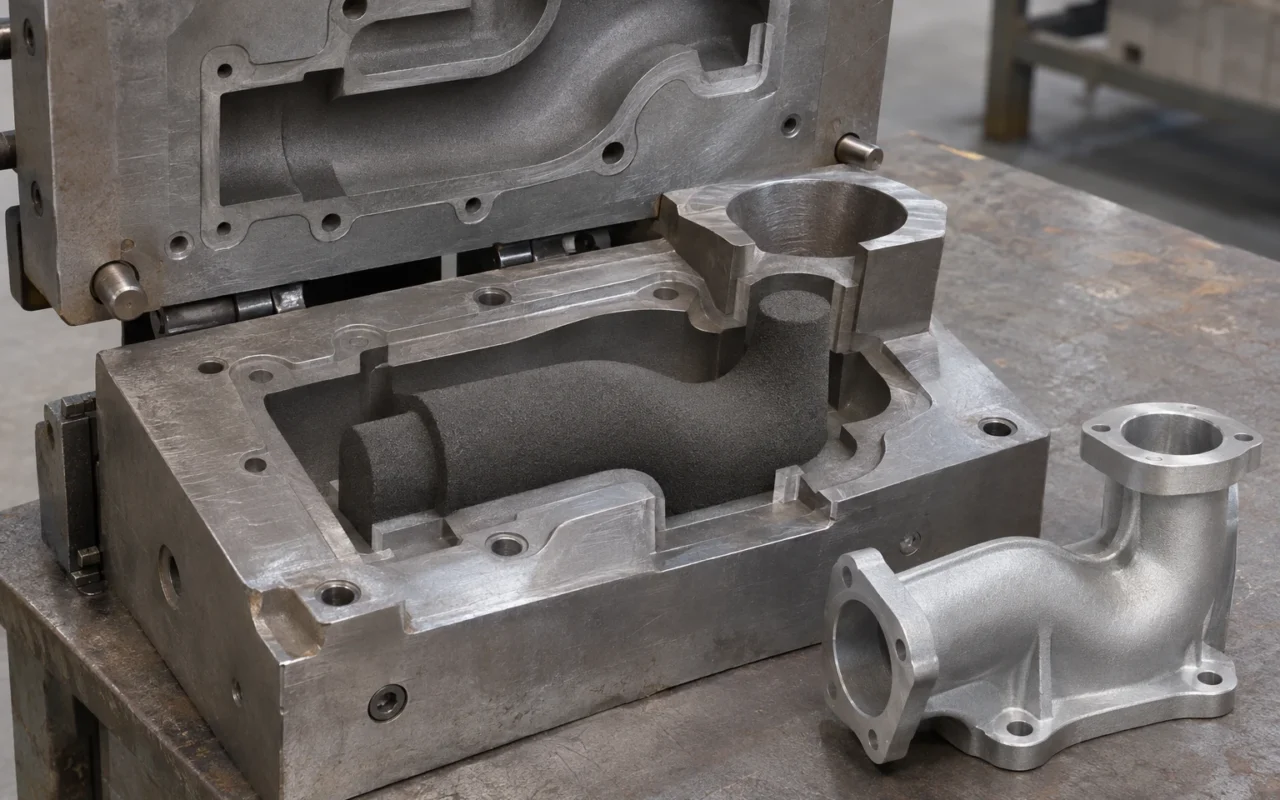
Use permanent molds once the external design stabilizes
For compatible aluminum and other nonferrous castings, prioritize gravity permanent-mold casting as the next stage once the exterior is stable and the same drawing brings repeat orders. Keep sand casting for trials, variants and frequent external changes to control early tooling and revision work. Complex interiors can retain sand cores instead of changing to metal cores with the outer mold.
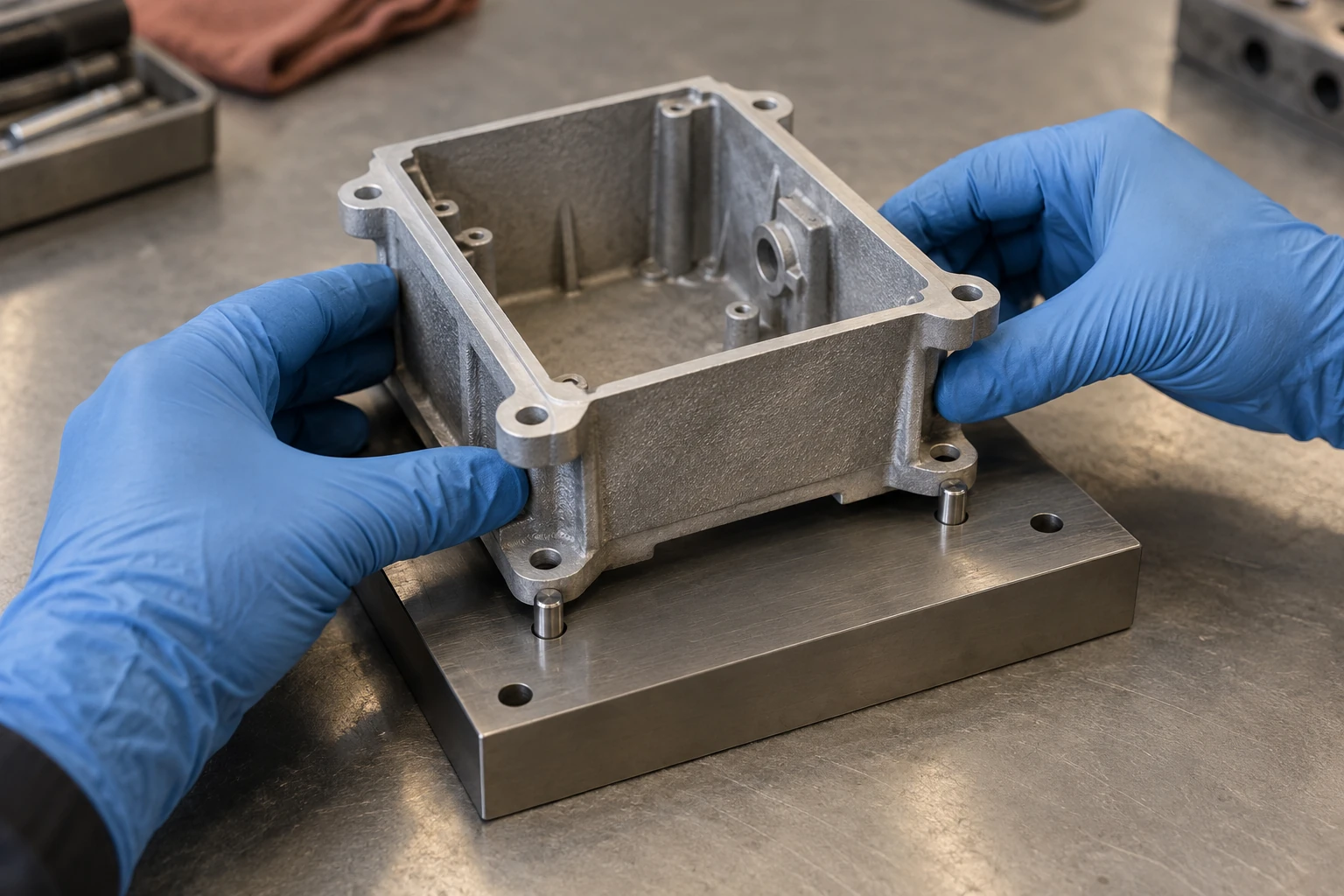
Gravity permanent-mold casting fills by gravity in reusable metal tooling. Its equipment and filling differ from high-pressure injection; the latter is covered in the sand casting and die casting comparison.
Repeating one exterior gives the metal mold a purpose
Sand molds must be remade after pouring and shakeout, so repeat orders keep consuming molding, cleaning and handling work. Metal molds return to service after extraction. Preparation shifts toward tool development, coating, preheating, cooling and maintenance.
For long-term deliveries to a fixed drawing, reusing a tool supports consistent operations and reduces moldmaking for each casting. External repeatability, surface condition and machining allowances can be organized around fixed tooling: these are important production benefits of the transition.
MRT Castings’ gravity die casting overview treats reusable molds, filling and tool maintenance as a complete capability. The transition establishes a sustainable mold process, rather than merely replacing sand with metal.
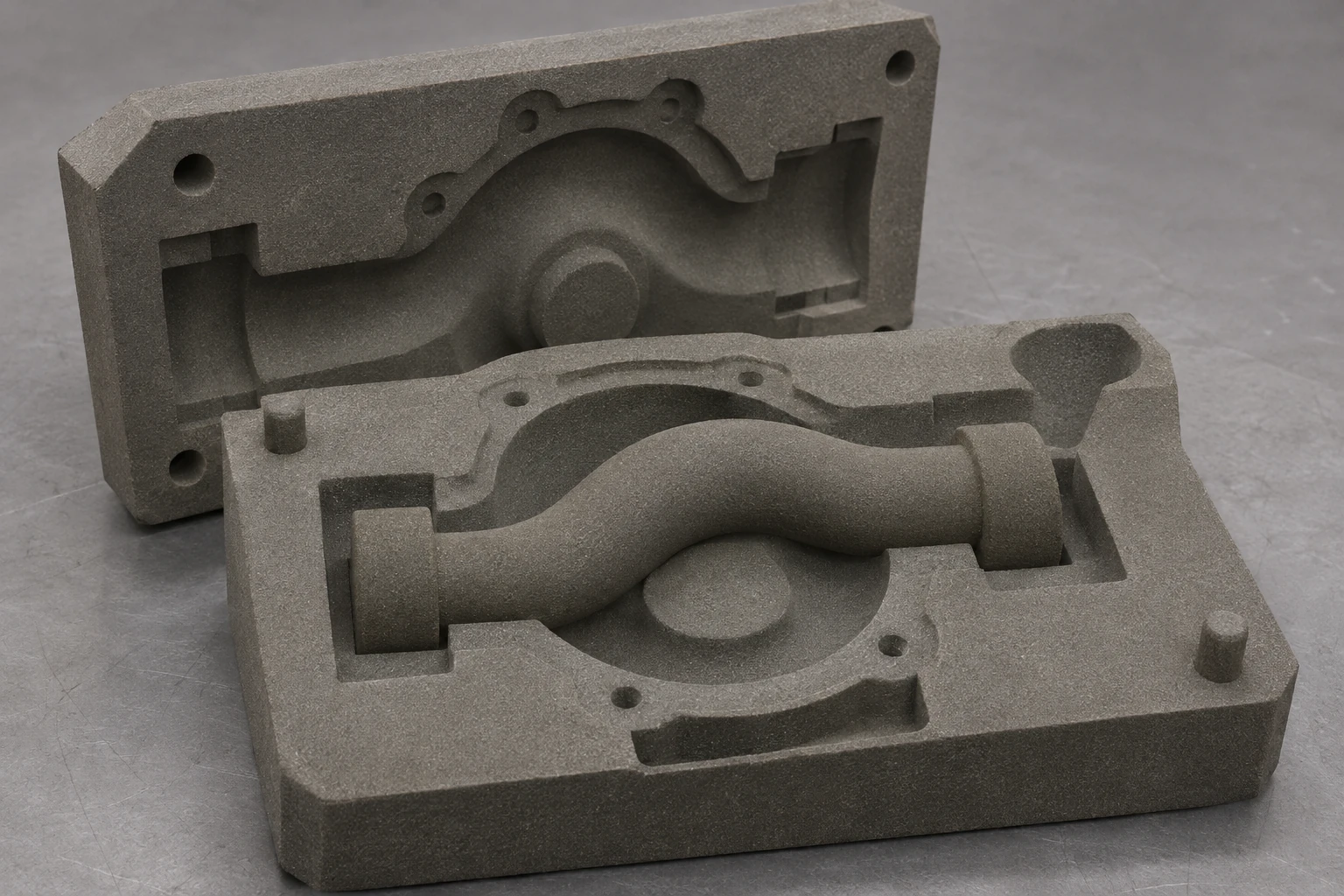
Sand reduces early work in trials and frequent revisions
While interfaces, contours and mounting relationships are changing, a metal mold transfers those changes into physical tooling. Sand casting, particularly direct sand printing, produces castings for the current version and lets the sand data change before expensive tools are fixed.
Keep sand as the first choice for initial development, small spare-part batches and multiple versions. Introduce permanent molds after the exterior stabilizes rather than repeatedly changing a tool for an unfrozen design. The aluminum sand casting workflow explains the underlying operations.
Use the order horizon to judge tooling payback
Metal-mold development and trials happen first; repeat production then uses the per-part savings. Ask whether cumulative savings within a credible order horizon cover added tooling and maintenance. Optimistic totals over many years can overstate tool utilization.
Express each route as “initial preparation + quantity × unit cost.” Where permanent-mold unit cost is lower, a larger unit saving recovers the extra tooling faster. For one small batch, sand’s lower initial investment usually has the advantage.
MRT’s process selection guide also combines tooling with quantity. Stable design and repeatable orders are more useful decision criteria than a universal annual-volume threshold.
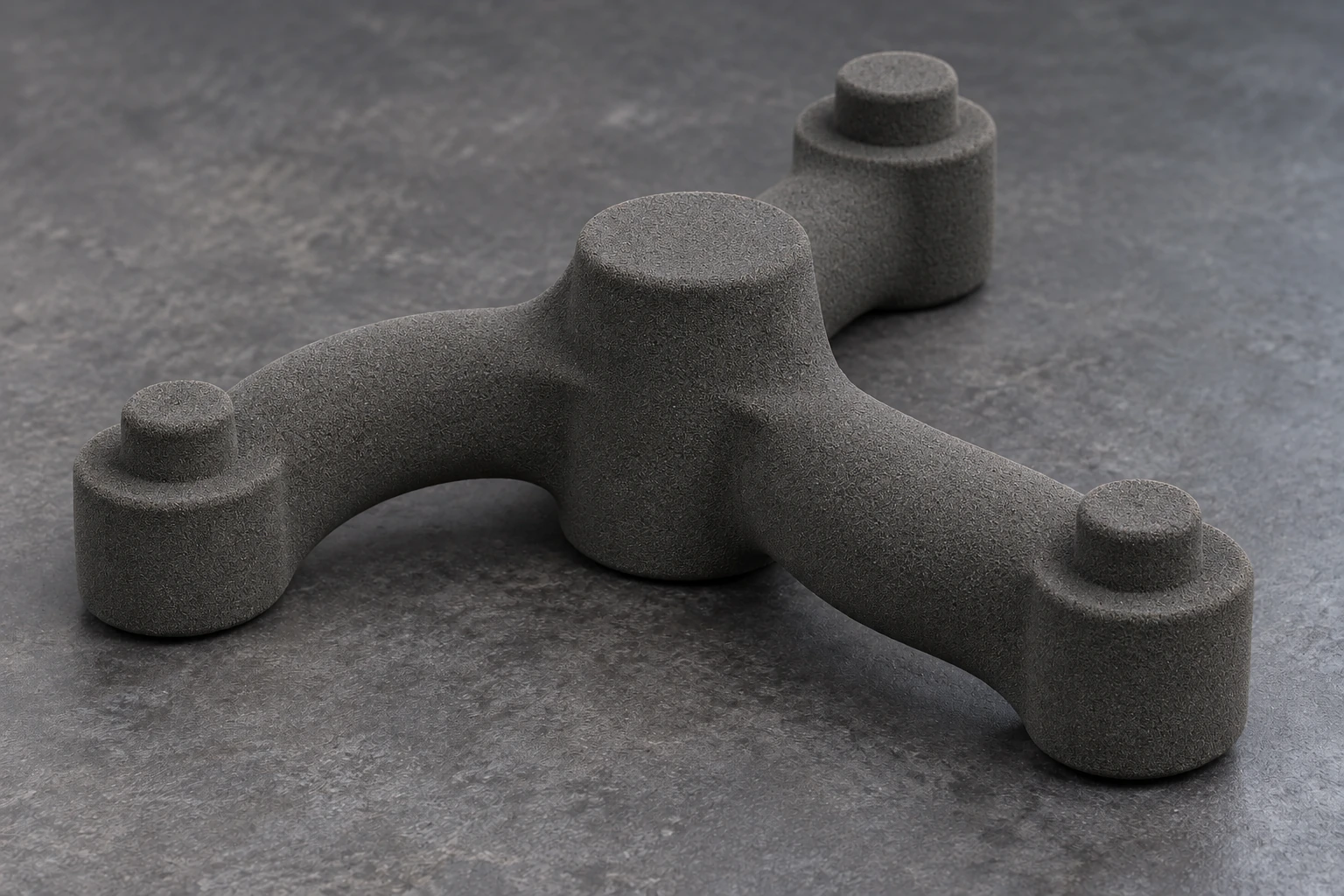
A metal outer mold can still use sand cores
The metal mold repeats the outside; the sand core forms the internal cavity. This division lets housings with stable exteriors and complex interiors use permanent molds. MRT’s published process also includes sand cores for complex internal forms.
If mounting positions stay fixed but passages have several versions, retain the outer die and change the corresponding core. Conventional core boxes or digital printing can produce those cores. New printing capacity then serves internal geometry without remaking the entire exterior mold.
| Product state | Recommended arrangement | Main benefit |
|---|---|---|
| Trials, small quantities and variants | Sand casting, with direct printing where useful | Low initial tooling and straightforward revisions |
| Stable exterior and continuing orders to one drawing | Gravity permanent-mold casting | Reuse the outer mold for repeat production |
| Stable exterior, complex or changing interiors | Metal outer mold with sand cores | Exterior repetition and internal flexibility |
| Large size or external undercuts overcomplicate metal tooling | Retain sand casting | Avoid burdensome tooling complexity |
Keep sand for large, complex external shapes
Repeat orders do not mean every part should move to permanent molds. Very large parts, many external undercuts or elaborate moving mechanisms can substantially increase tooling and operating work. Sand is preferable there. The transition mainly suits conventional nonferrous parts with compatible materials and exteriors that allow repeated mold opening.
Specify surfaces, critical dimensions and heat treatment at the same delivery condition. Comparing acceptable finished parts assigns savings in molding and machining to the order, rather than ranking unlike unfinished castings by appearance.
The Cprint 3D SJ-1200 makes development molds and complex cores for metal outer molds. Bring typical housings, passage drawings and repeat-order information to the Cprint 3D team to configure printing within the existing foundry workflow.