
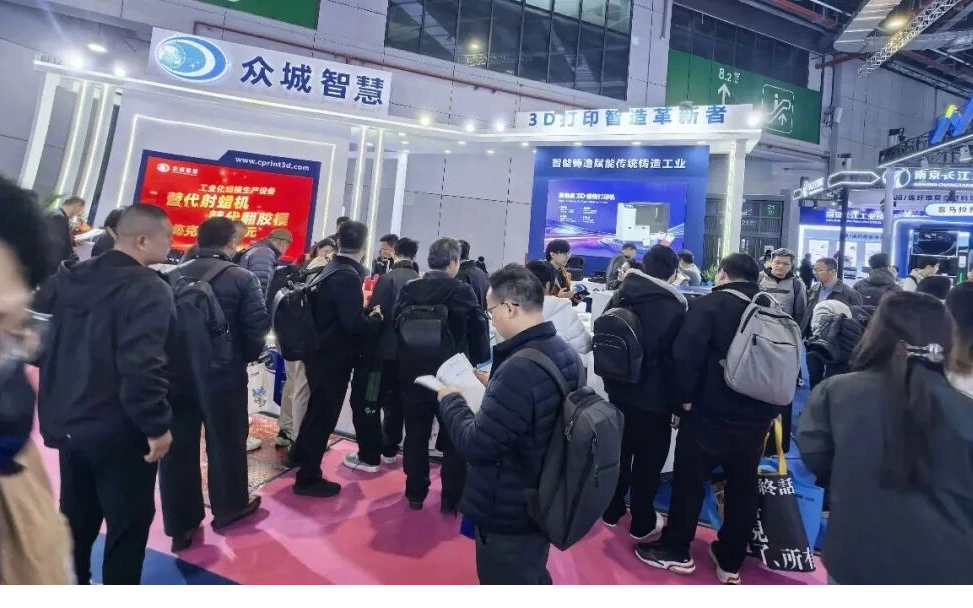
Cprint 3D exhibited the 3H-420 2.0 wax 3D printing system at TCT Asia in Shanghai from March 17–19, 2026. Jewelry and industrial investment-casting patterns accompanied the equipment display.
The show allowed additive-manufacturing, jewelry and foundry professionals to inspect the equipment, pattern surfaces, complex features and digital nesting, then discuss the practical path from CAD to wax pattern and lost-wax casting.
Organizer information described more than 450 exhibitors and over 40,000 square meters of exhibition area. Cprint 3D’s internal event records noted interest from aerospace suppliers, jewelry manufacturers and precision foundries and more than 30 initial cooperation discussions; these leads require later project confirmation.
What the booth demonstrated
The 3H-420 deposits build and support wax to create casting patterns. After printing, support material is removed under a controlled process, and accepted patterns proceed through treeing, shell building, dewaxing and pouring. Demonstrations covered the triple-printhead system, build area, fine filigree, batch nesting and material compatibility.
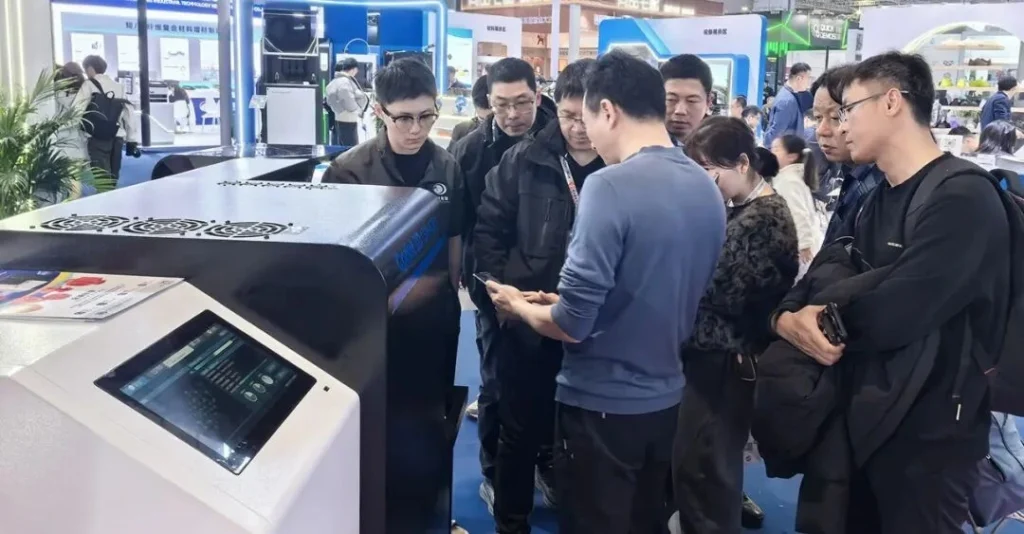
Release figures cited vertical build speed up to 6 mm per hour and about 26 hours for a full 157 mm-height build. Qualified settings were reported to reproduce 0.12 mm features with 4 μm surface accuracy and an N8-class finish. These results depend on geometry, material, maintenance, cleaning and inspection. Use the current 3H-420 page for controlled specifications.
See the related 3H-420 product update.
Application questions from visitors
Jewelry teams asked about openwork, filigree, settings, mixed designs and support removal. Industrial foundries focused on impellers, curved surfaces, iteration, burnout and consistency. Printing can reduce dedicated wax-tool preparation, but it does not remove shell building, pouring or inspection.
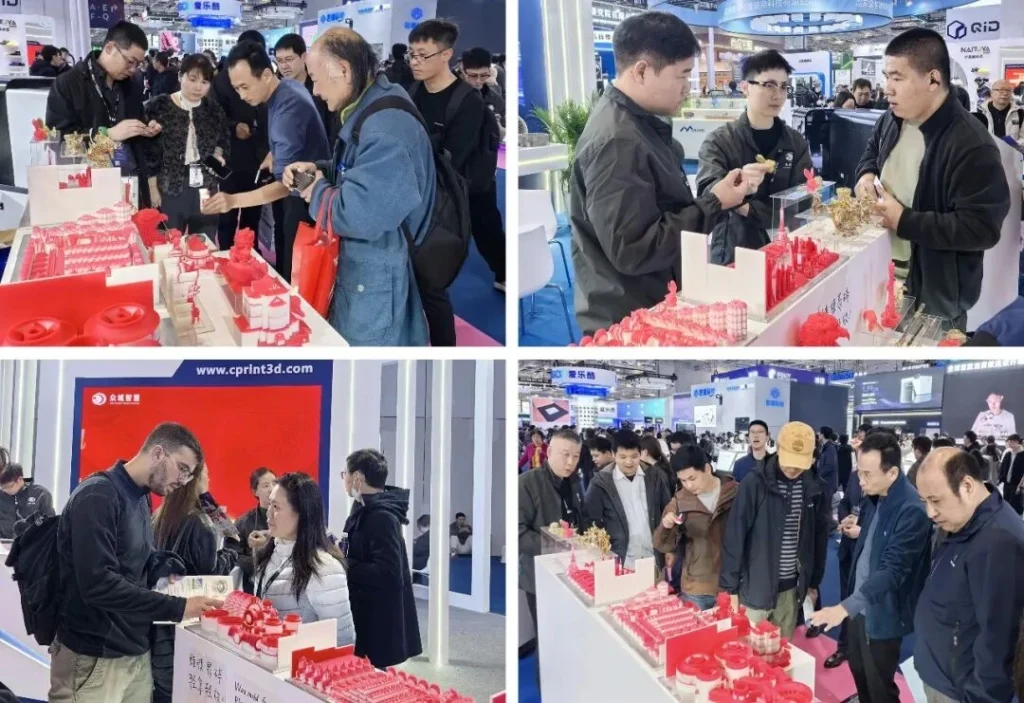
Display samples show what a qualified job has achieved, not that every regulated aerospace, medical or defense part can use the same settings. Customer material, process and quality approvals still apply. Explore investment casting, jewelry manufacturing and the wax versus castable-resin comparison.
Follow-up
Industry forecasts and event discussions point to further digitalization in investment casting, but each buyer should validate cost, yield and lead time with representative jobs. Submit a model and casting requirements, or browse event reports.