

Qiangguo Zhizao recently visited Cprint 3D in Foshan for two documentary features, “Breaking the Wax Barrier” (《破蜡突围》) and “From Sand to Form” (《聚沙成器》), tracing nearly a decade of work in wax-jet and sand 3D printing.
From a high-quality wax pattern to a sand mold or core built layer by layer, both stories focus on a foundational question in advanced manufacturing: how can critical equipment, dedicated materials, software controls and production processes become independently controlled and reliable on the shop floor?
Breaking the precision-casting bottleneck at the wax-pattern stage
In investment casting, the wax pattern establishes the geometry of the cavity used later in the process. Its accuracy and stability directly influence precision castings for applications such as turbine blades, robotic components and advanced medical devices. For years, Chinese manufacturers faced dependence on imported high-end wax-jet printers, dedicated wax materials and core components, exposing production to high prices, long lead times and supply interruptions.
Founder Yang Wenyan began exploring wax-jet 3D printing in 2016. After two early development cycles stalled, the team rebuilt a stable R&D program in 2021 and introduced its first-generation domestic wax-jet printer in 2022. Once the machine entered real applications, nozzle clogging, material stability and continuous-operation issues shifted the task from simply building equipment to achieving production reliability.

Building a complete system, from dedicated wax to second-generation equipment
According to the program preview, the R&D team continued formulation and machine tests through the 2023 Spring Festival, producing about 50 tonnes of rejected wax in the process. Repeated investigation ultimately identified and resolved nozzle clogging caused by polymer precipitation, while giving the team command of the core formulation for dedicated jetting wax.
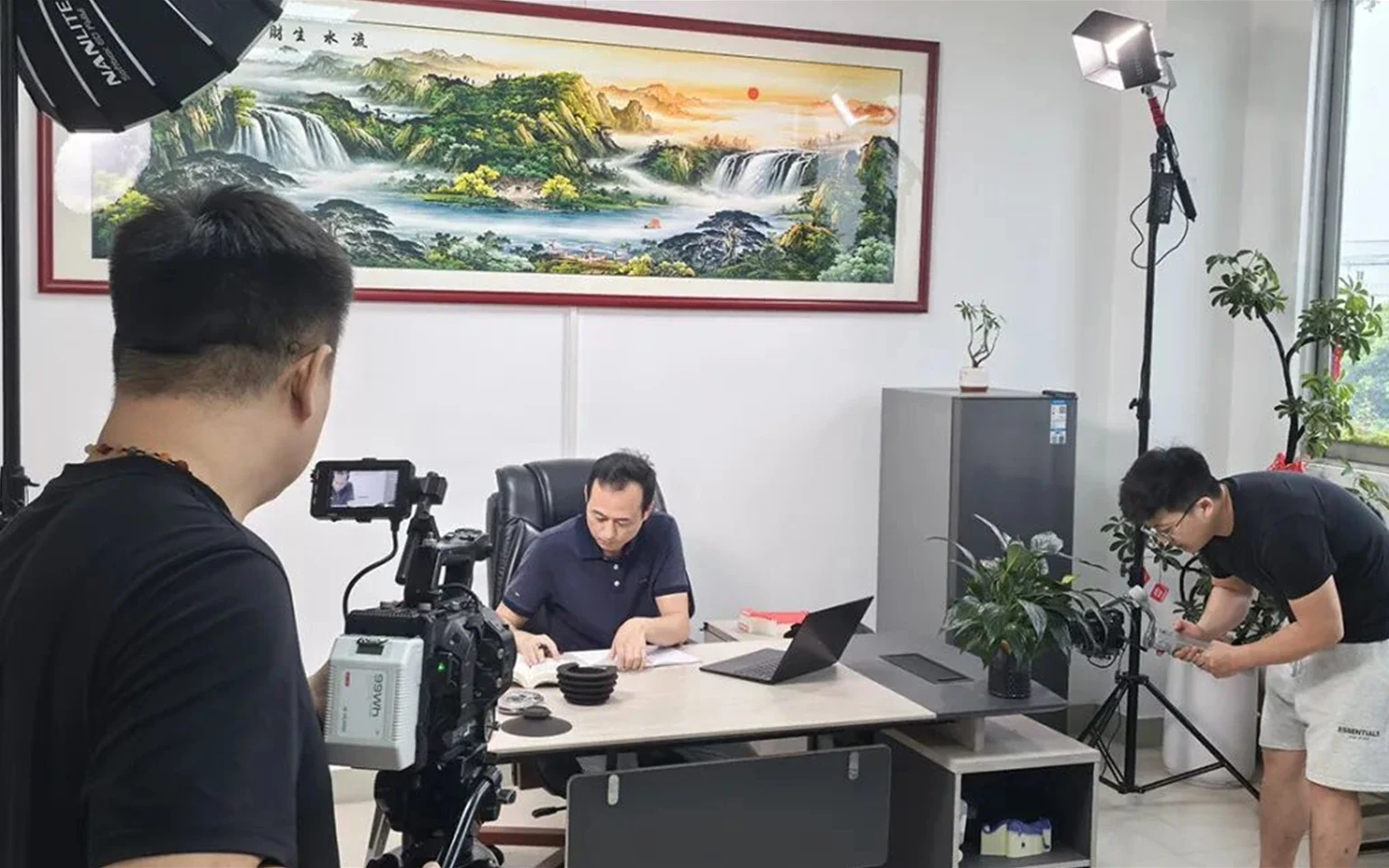
Later in 2023, an overseas supplier suspended deliveries of key printheads. Even after supply resumed, component quality and after-sales support remained production risks. Cprint 3D therefore advanced a second-generation platform with independently designed multi-head, multi-wax and multi-channel feed architecture, along with in-house inspection equipment, slicing software and control systems. Program materials cite temperature control within ±1°C and wax droplet placement error within 2 microns. The breakthrough was no longer a single machine, but coordinated control of equipment, material, software, inspection and process.

From wax to sand: shortening the tooling cycle in casting
Conventional sand casting depends on patterns and core boxes. Tooling can take weeks or months to design, machine and complete, and a design change may require starting over. Sand 3D printing produces molds and cores directly from prepared digital data, reducing dependence on conventional tooling and creating a more flexible route for new-product development, complex internal passages and low-volume production.
Yet high equipment prices, specialized sand and ongoing operating costs have limited wider adoption. Yang and his team entered sand 3D printing in 2015 with a practical goal: make the technology affordable and usable for more small and medium-sized foundries.

Ordinary-sand compatibility and reclamation lower the barrier to adoption
Instead of relying entirely on highly flowable specialty sand, the team pursued what it calls a “sand-flexible” approach. A precision control system built around belt-fed sand delivery can transport less-flowable ordinary sand steadily, balancing metering, spreading and printing stability while reducing dependence on costly dedicated media.
The team also addressed spent sand after casting. Drawing on mineral calcination, it developed a compact electrically heated rotary kiln that combines high-temperature treatment with mechanical cleaning to restore used sand for printing. Ordinary-sand compatibility and reclaimed-sand reuse work together to reduce everyday material consumption and operating cost.
A sand 3D printer makes molds and cores; mold assembly, pouring and quality inspection still follow. Its value is not to replace the entire foundry process, but to turn one of its most tooling-intensive front-end stages into a digitally driven manufacturing step.
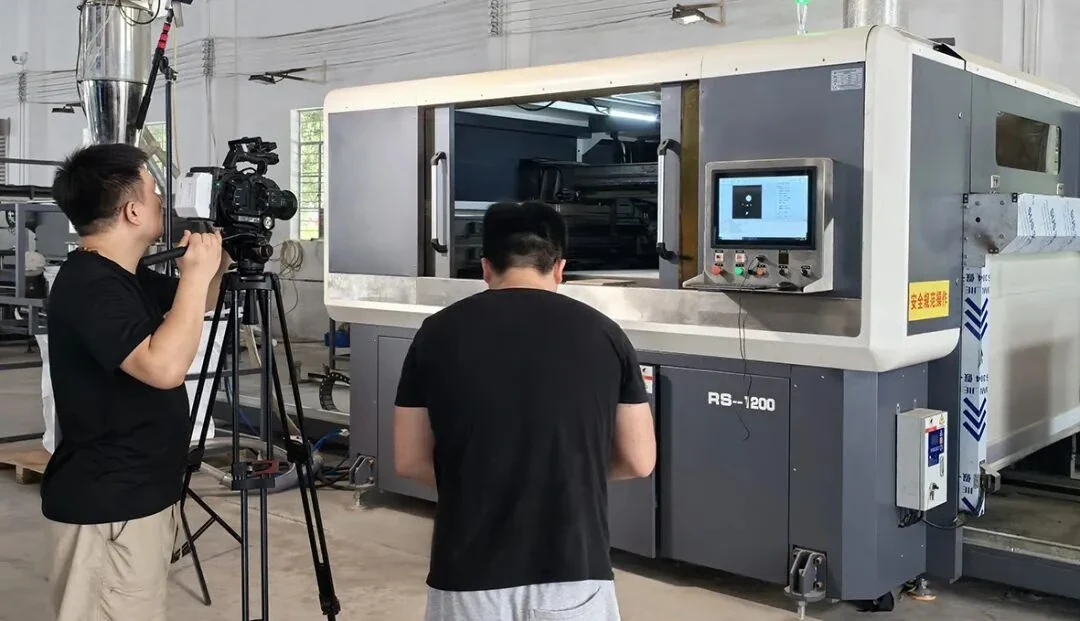
From wax to sand, the breakthrough is more than one machine
Wax-jet printing supports digital pattern production for investment casting, while sand printing digitizes the production of molds and cores. The processes differ, but the industrial questions are similar: Can the equipment run reliably? Are materials continuously available? Can software and controls be developed independently? Can the total operating cost work in real production? Cprint 3D’s decade-long effort shows that domestic substitution is not the copying of one machine; it is the gradual completion of an integrated system spanning materials, software, inspection, control and resource reuse.
The two Qiangguo Zhizao features will premiere on China New Film’s Old Stories Channel on October 10, 2026, with a simultaneous broadcast on CCTV Mobile TV and repeat showings on October 11.