
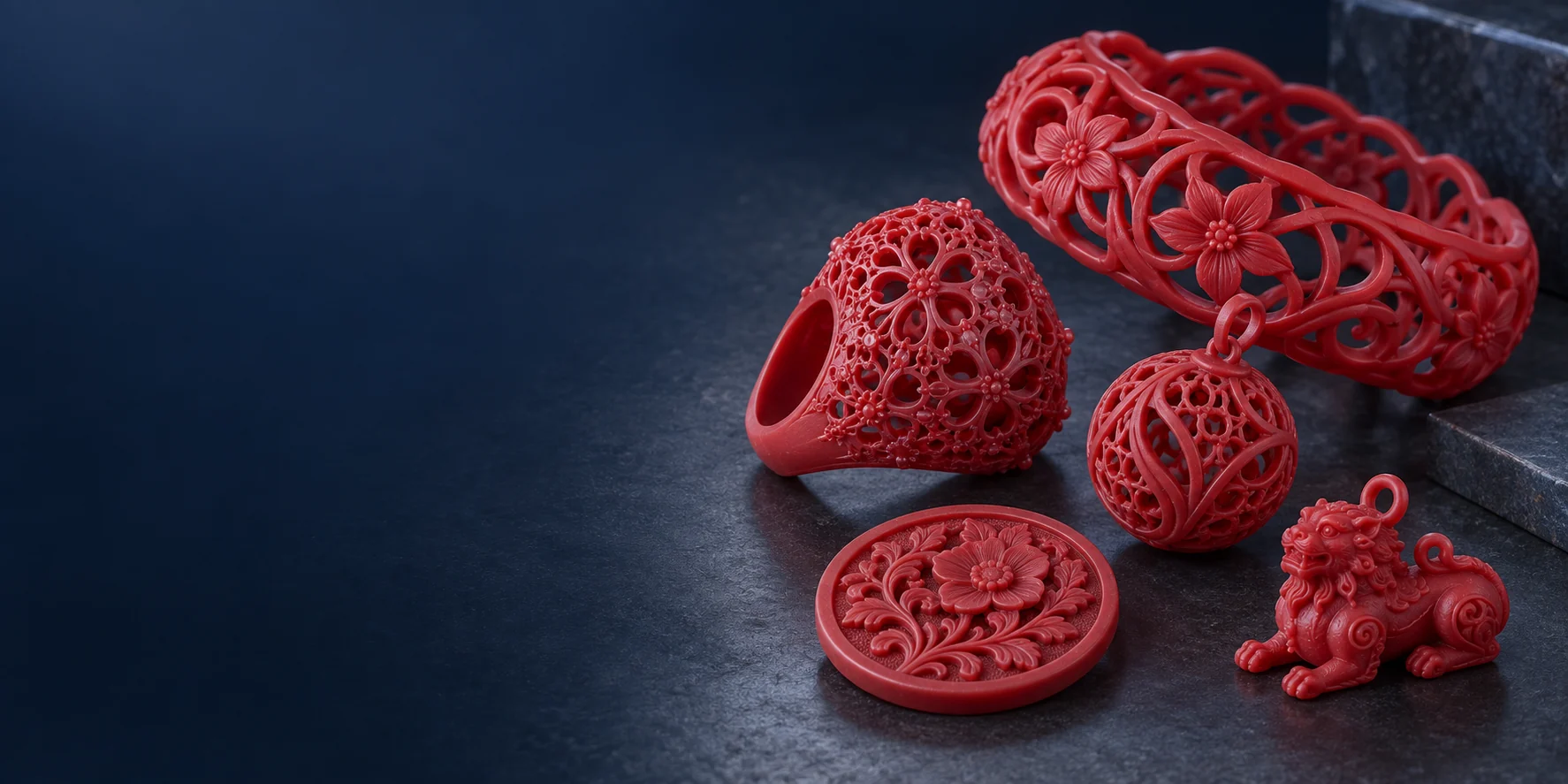
3D Printing for Jewelry Manufacturing
Turn intricate jewelry concepts into casting-ready wax patterns with fine detail, smooth surfaces, and consistent results—helping manufacturers meet demanding production schedules, fulfill repeat orders, and scale for high-volume production.
PRODUCTION FLEXIBILITY
High-Volume Output, Flexible Production
Maximize each build by producing more parts and a mix of product types at the same time.
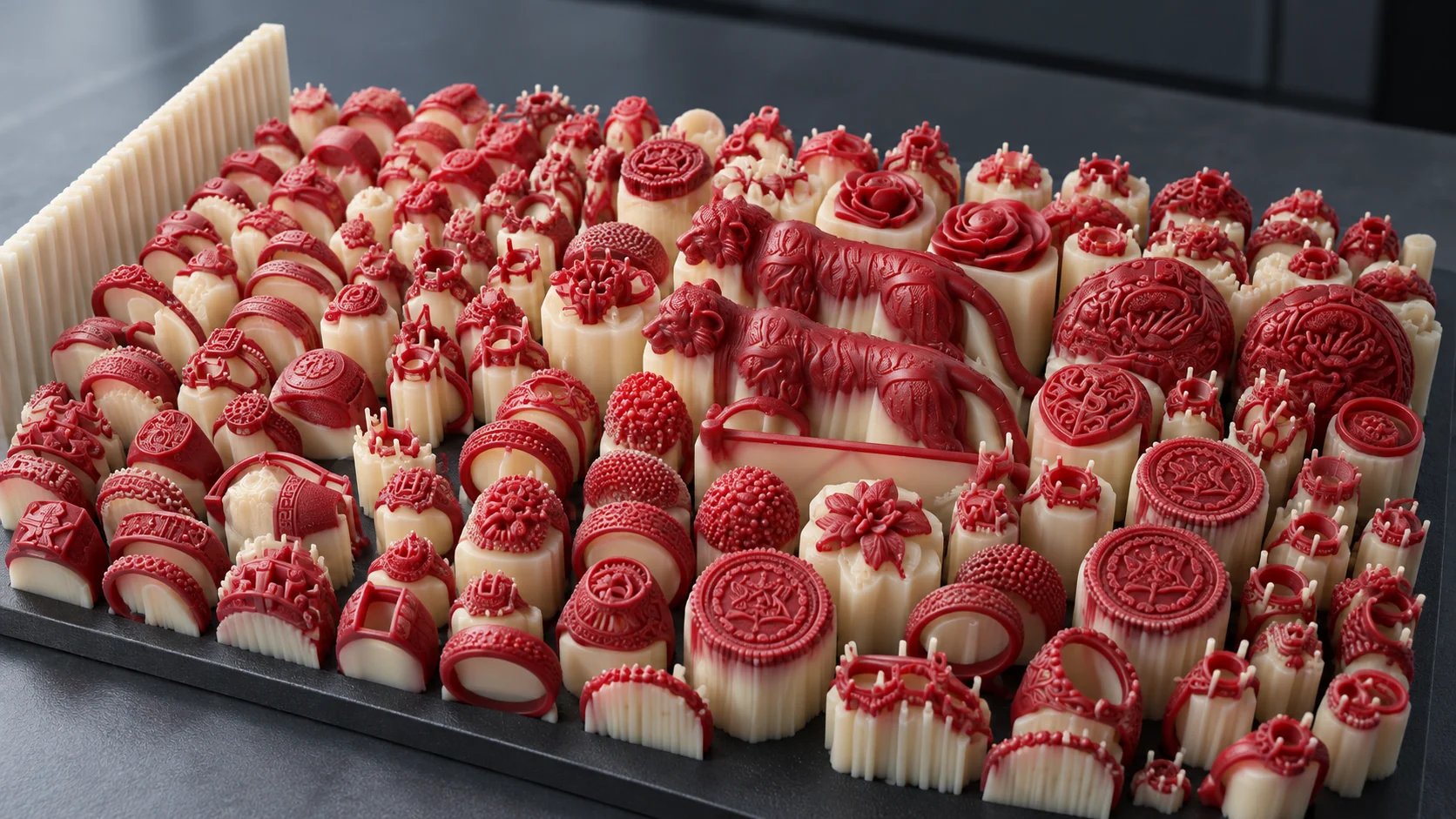
Produce More in Every Build
Our 3D printing workflow accommodates a high volume of wax patterns in a single build, helping manufacturers fulfill large orders and keep demanding production schedules on track.
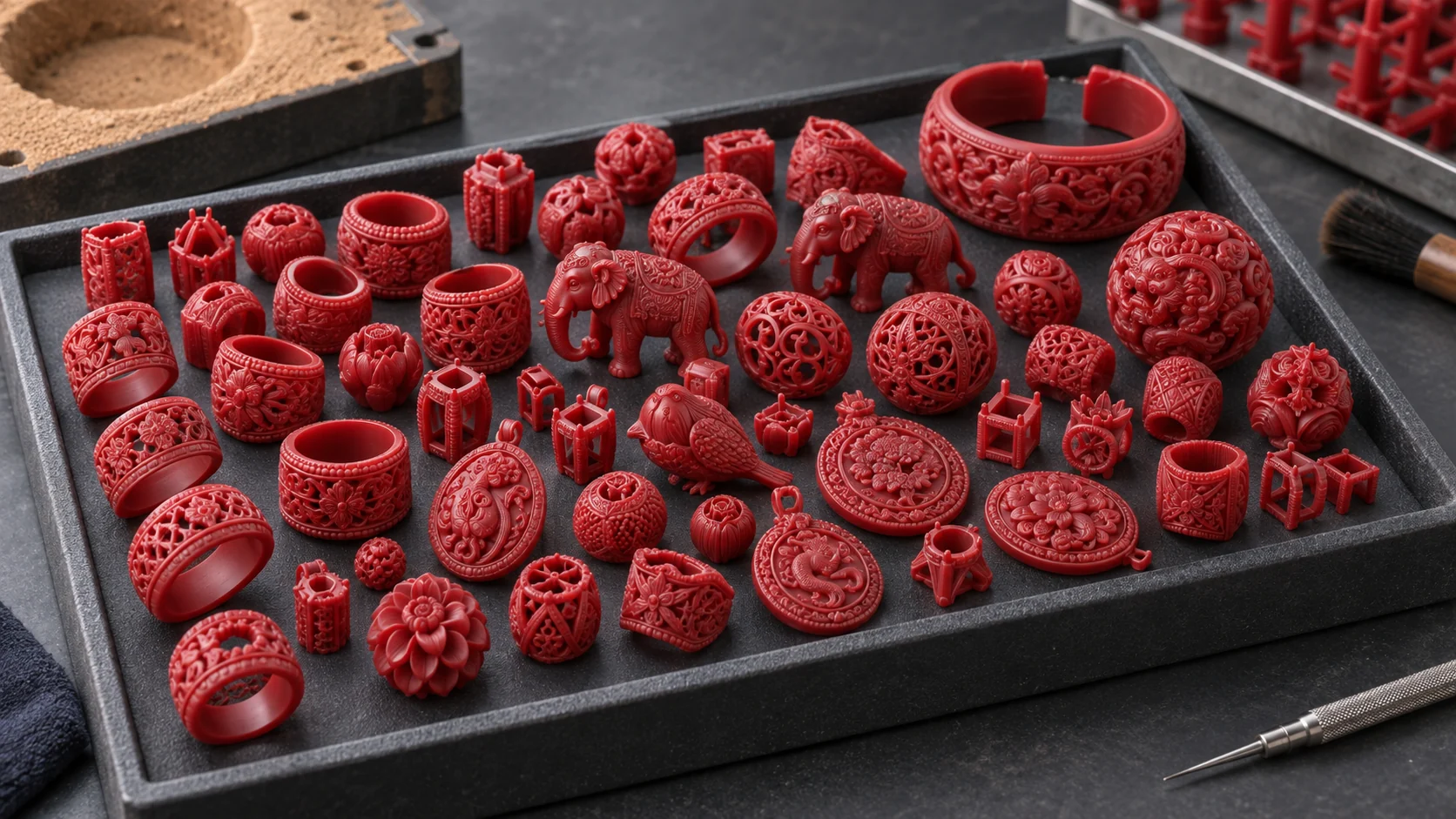
Combine Different Products in a Single Build
Rings, bracelets, pendants, personalized pieces, and other castable designs can share the same build, allowing manufacturers to combine different orders, sizes, and product types without separating them into individual production runs.
DESIGN APPLICATIONS
Jewelry Designs Ideal for Digital Wax Patterns
Digital wax patterns give jewelry manufacturers greater freedom to produce intricate, lightweight, and personalized designs through lost-wax casting.

Pavé and Micro-Setting Designs
Capture small stone seats, closely spaced prongs, and precise setting geometry so critical details remain clearly defined before casting.

Filigree, Openwork, and Fine Mesh
Create delicate interconnected lines, open geometries, and fine mesh structures while maintaining the spacing and definition the design requires.

Hollow, Lightweight, and Sculptural Forms
Create dimensional pieces with hollow sections, flowing curves, and controlled wall thicknesses—supporting bold sculptural forms without relying on fully solid construction.

Custom Rings and Personalized Jewelry
Vary ring sizes, lettering, symbols, and decorative details without creating a separate physical master model for every personalized version.
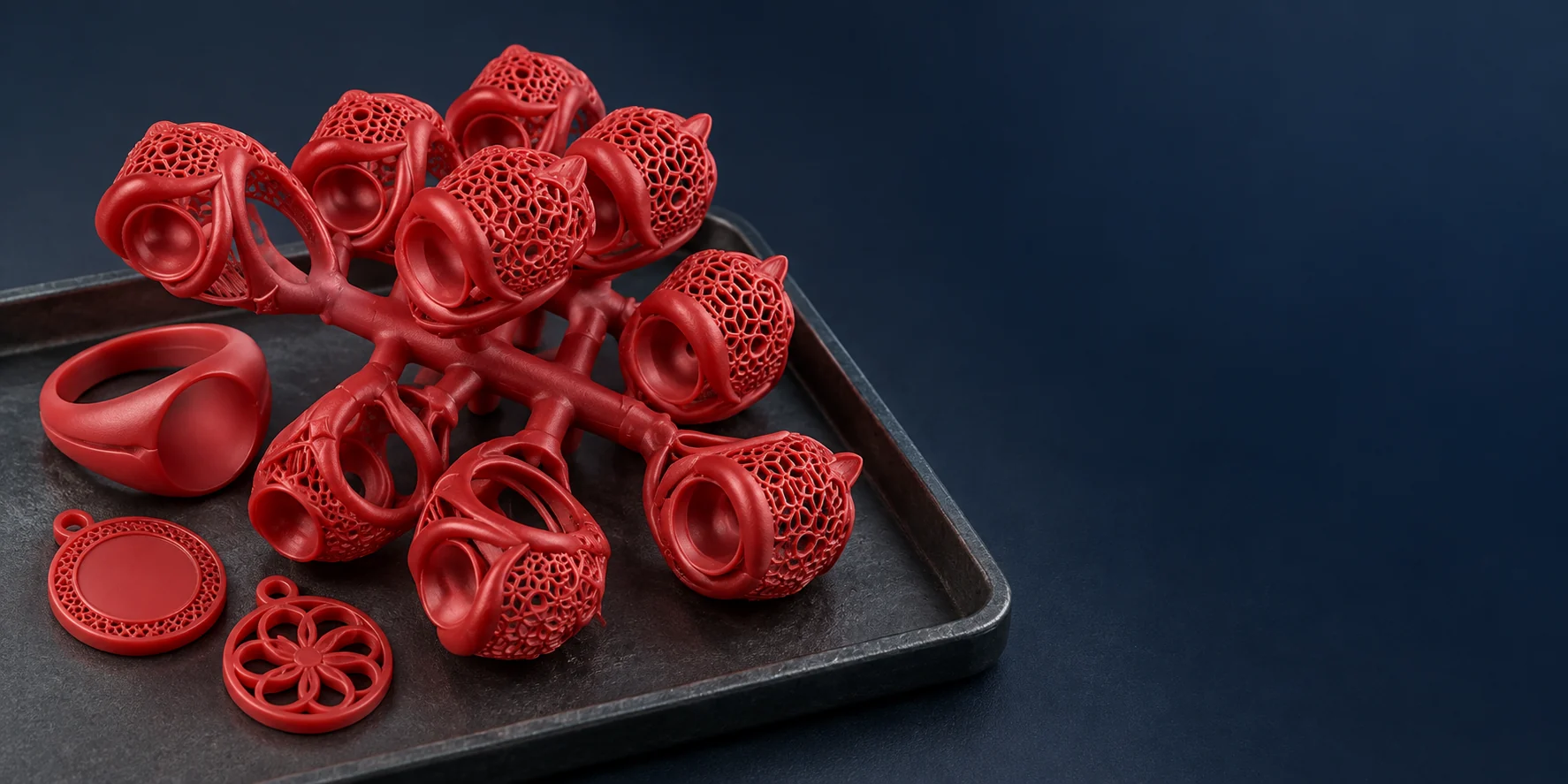
FROM CAD TO CASTING
A Direct Digital Path to Lost-Wax Casting
Our 3D printing workflow turns approved jewelry designs into physical wax patterns that fit into established lost-wax casting processes.
Produce Wax Patterns Directly
Create physical wax patterns without creating a dedicated mold or master model for each design variation.
Integrate with Existing Casting Workflows
Remove the supports, inspect the wax patterns, and attach them to a casting tree. Invest the tree, remove the wax, and pour the metal. See the wax-to-metal ring workflow for the checks at each stage.
Revise Designs Without Retooling
Update sizes, lettering, and other design details digitally without creating new physical tooling for every revision.
Printed wax patterns are casting intermediates, not finished metal jewelry.
WHY CPRINT 3D
Why Choose Cprint 3D for Jewelry Manufacturing
Our jewelry 3D printing solution combines wax materials developed for casting, high-throughput production, greater design freedom, and dissolvable supports to streamline preparation for lost-wax casting.
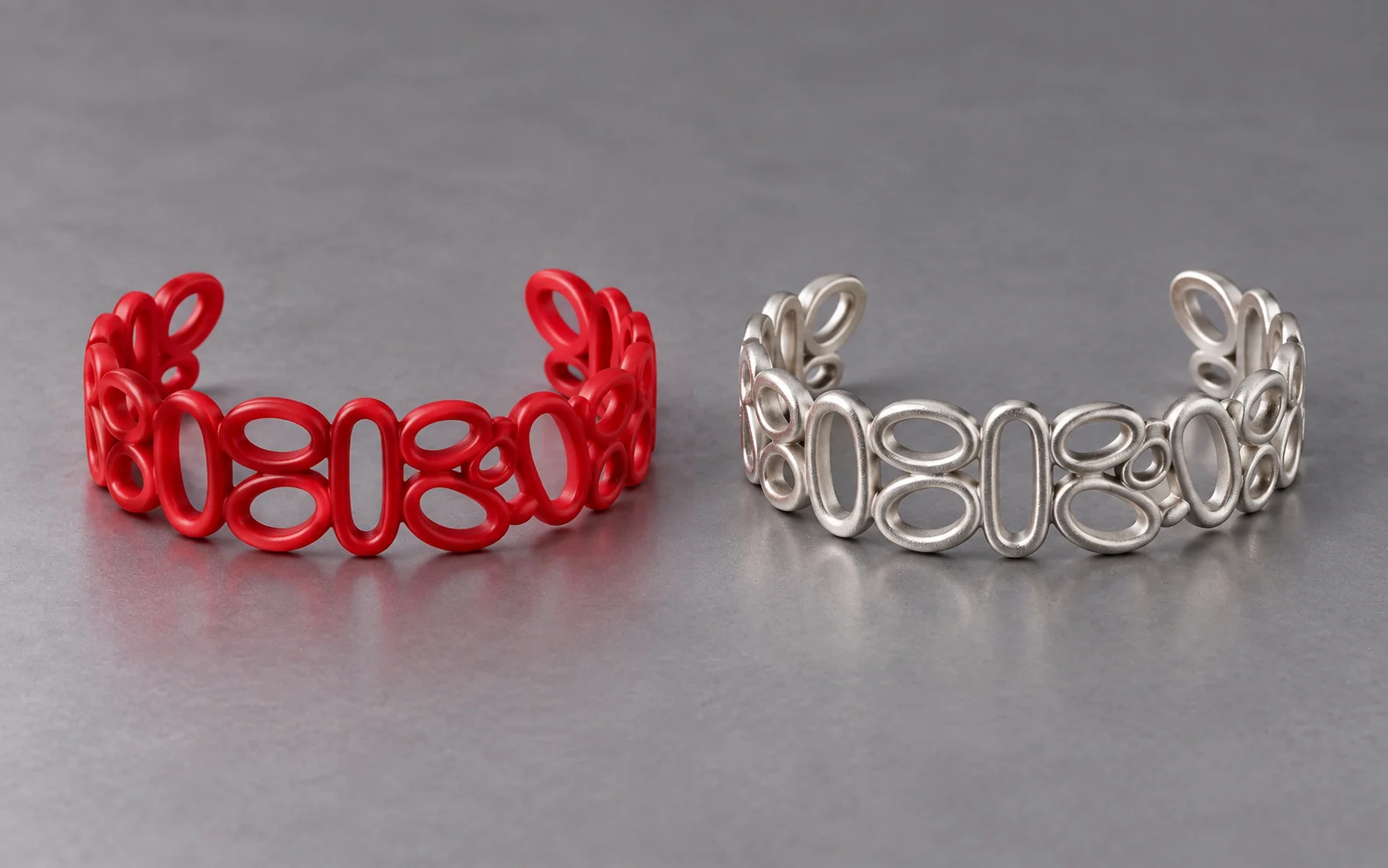
Reliable Casting Performance
Our wax patterns retain fine details and smooth surfaces and are designed to burn out consistently within established jewelry casting workflows.
Production-Scale Productivity
High part counts and mixed-design builds help manufacturers use each production run efficiently and keep large orders on schedule.

Greater Design Freedom
Delicate stone settings, open structures, undercuts, and intricate forms can be produced with fewer geometric constraints, giving designers greater freedom to create.
Easier Preparation for Lost-Wax Casting
Dissolvable supports can be removed without hand-cutting around delicate features. After support removal, the wax patterns can move into the standard lost-wax casting workflow.
Jewelry Wax Pattern Evidence and Resources
Jewelry technical resources
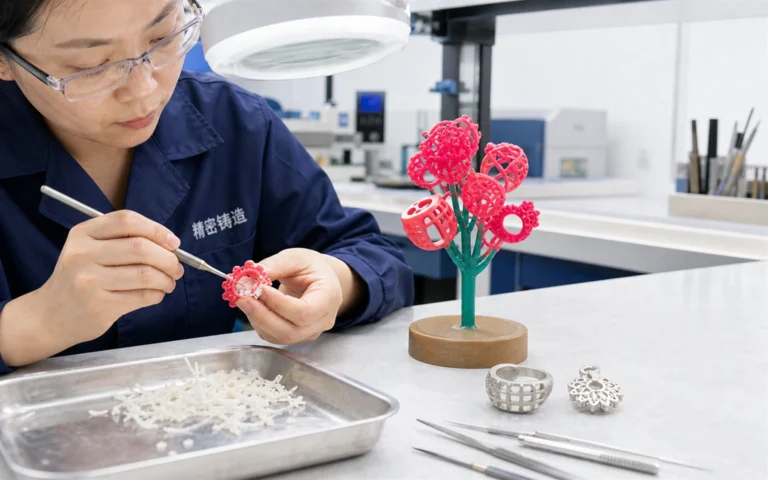 Jewelry Production
Wax 3D Printing for Jewelry Prototyping and Small-Batch Casting
Follow the jewelry workflow from CAD, nesting and wax printing through support removal, inspection, treeing, investment, dewaxing and metal casting.
Read the Article
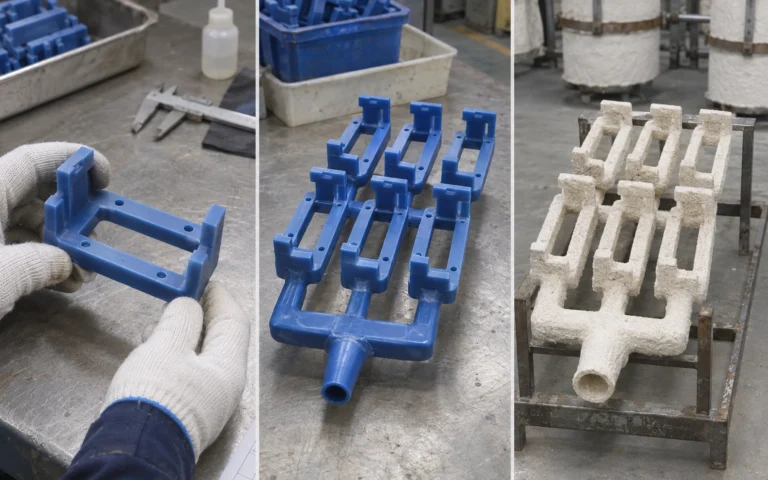 Lost-Wax Casting
Wax Pattern Post-Processing for Investment Casting
Follow a printed wax pattern through support removal, inspection, tree assembly, shell building, dewaxing, pouring and casting finishing.
Read the Article
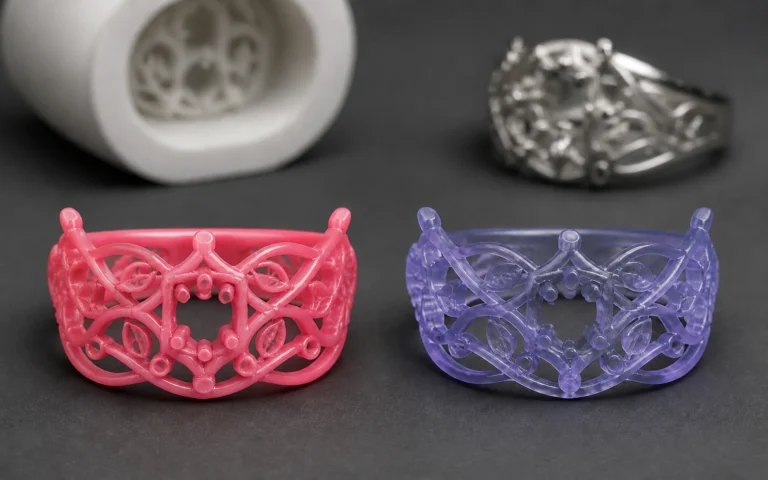 Process Comparison
Wax Jetting vs. Castable Resin: Choosing a Process for Jewelry Casting
Compare wax jetting and castable resin by materials, supports, cleanup, burnout, surface quality, throughput and total cost for jewelry casting.
Read the Article
HAVE A QUESTION?
Frequently Asked Questions About Jewelry Manufacturing with 3D Printing
Understand how printed wax patterns fit into jewelry production, customization, repeat orders, and established lost-wax casting workflows.
Prepared jewelry CAD files are used to produce physical wax patterns. After support removal, cleaning, and inspection, the patterns can be assembled for investing, burnout, metal casting, and the manufacturer’s usual finishing and quality-control steps.
Common candidates include pavé and micro-setting designs, filigree and openwork, fine mesh, hollow or lightweight forms, sculptural pieces, and personalized variants. Final feasibility depends on the design’s wall thicknesses, clearances, setting geometry, handling needs, and casting process.
Yes. Once the dissolvable support material has been removed and the wax pattern has been cleaned and inspected, it can enter an established lost-wax casting workflow. Investing and burnout settings should still be validated for the foundry’s materials, equipment, alloy, and quality requirements.
Yes. Ring sizes, lettering, symbols, and decorative details can be changed in the digital file without creating a separate physical master for every version. Different approved designs can also be arranged together in the same production build.
Yes. An approved production file can be retained for repeat orders and arranged again when more wax patterns are needed. Consistent results still depend on controlled file preparation, material handling, printing, support removal, and downstream casting conditions.
No. The solution produces wax patterns used as intermediates in lost-wax casting. Gold, silver, platinum, and other metal jewelry are created during the customer’s subsequent casting, finishing, stone-setting, assembly, and inspection processes.
Send the available CAD file or technical drawing, finished-piece dimensions, required wax-pattern quantity, jewelry metal and casting process, stone-setting or assembly requirements, target schedule, and current production challenge. The project form accepts STL, SLC, JCAD, MATRIX, PDF, JPG, PNG, and ZIP files.
START YOUR PROJECT
Discuss Your Jewelry Casting Project
Share the information you already have. Our application team can review the design, intended casting route, production requirements, and the next practical step.
WHAT TO INCLUDE
- Jewelry CAD file or technical drawing
- Finished-piece dimensions
- Required wax-pattern quantity
- Jewelry metal and casting process
- Stone-setting or assembly requirements
- Target schedule and current challenge
Accepted uploads: STL, SLC, JCAD, MATRIX, PDF, JPG, PNG, and ZIP. If the project has confidentiality requirements, let us know before sending sensitive files.